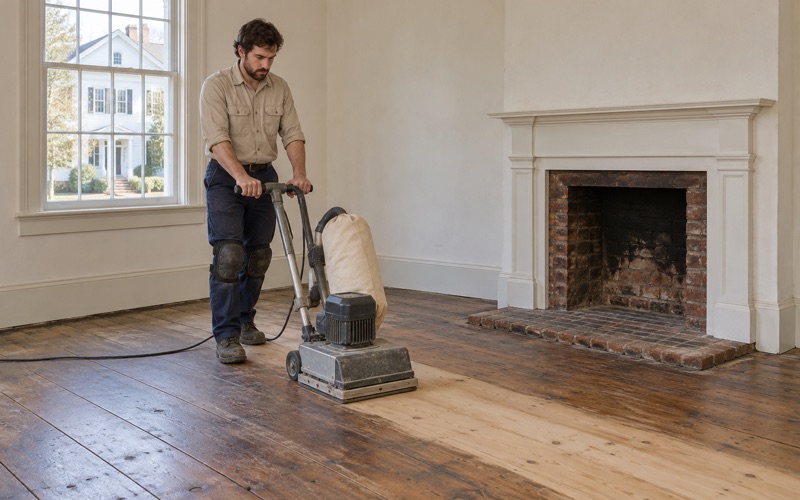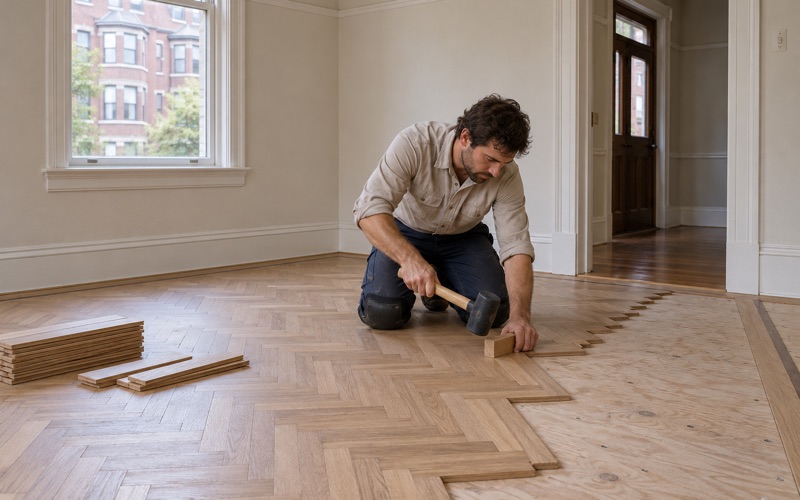
Somerville Wood Flooring brings more than 20 years of wood-flooring work to Back Bay, and most of it begins the same way: lifting a corner of carpet or an old sheet of linoleum to see what the house was actually built with. In a building this old the answer is rarely one species from the front door to the top floor. Pine, oak and later patch boards can all turn up inside a single unit, and each one sands differently.
Before a drum sander comes off the truck, we confirm the build year and check any painted surfaces, because Massachusetts sets its own lead-safe renovation rules for homes built before 1978. We also measure how much wood remains above the tongue on old softwood and narrow oak strip, since a floor sanded several times over may have one more pass left in it, or none.
Most Back Bay floors we quote now sit inside condominiums or apartments rather than whole houses. That shapes the schedule as much as the wood does: dust sealed to the unit we are working in, finishes chosen within the Massachusetts VOC limits for wood coatings, and work hours taken from the association’s own documents instead of guessed.
What Is Under the Carpet in a Back Bay Row House
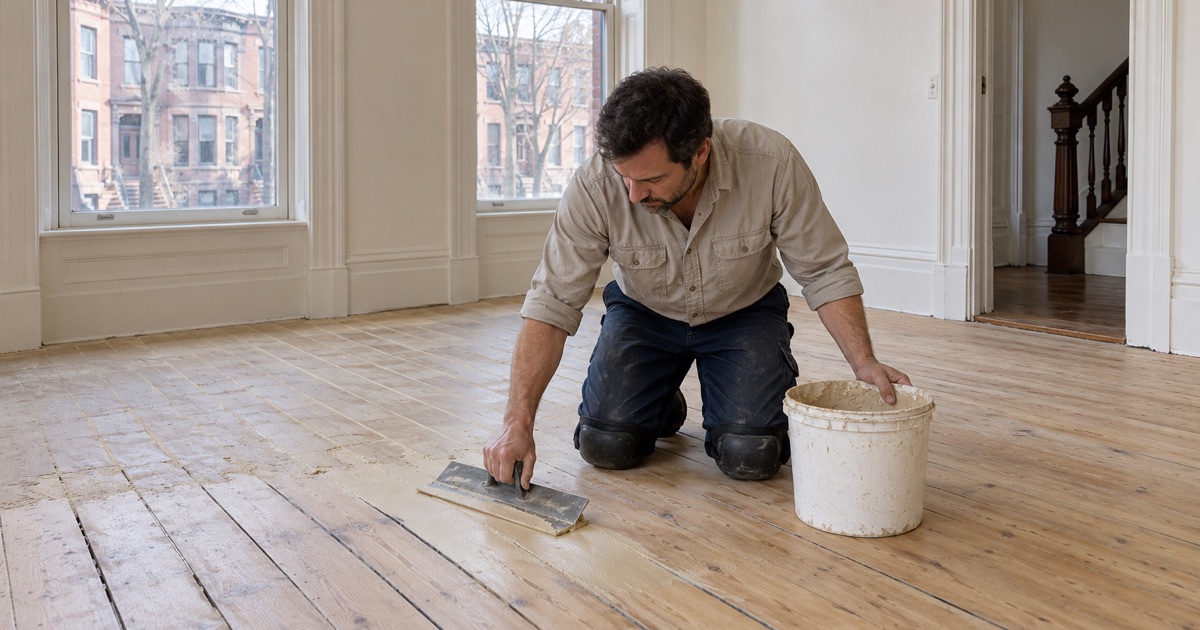
The clearest evidence for what an untouched Back Bay floor looks like comes from one house the City of Boston has documented room by room. It is a useful reference for anyone pulling up carpet in a unit nearby, as long as it is read as one house and not as a rule for the whole neighborhood.
The Gibson House at 137 Beacon Street
The Gibson family lived at 137 Beacon Street from 1860 to 1954, and the Boston Landmarks Commission’s interior study report, approved March 3, 1992, found that the interior has remained essentially unaltered. That makes it rare: a row house whose original floors were never stripped out for a renovation, a conversion or a new layout.
The report places the house among approximately two thousand row houses in the Back Bay, developed between 1859 and 1900. Its most useful line for a floor contractor is a general one: in that house, the floors beneath the carpets and linoleum are soft pine.
What Pulling Carpet Usually Reveals
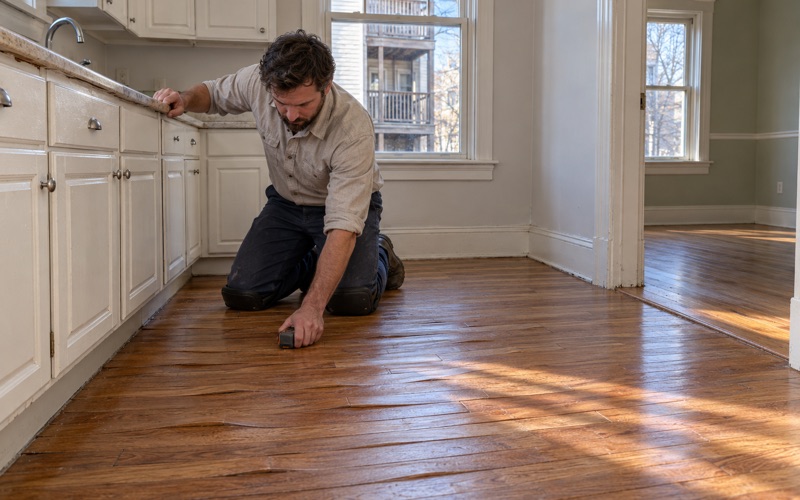
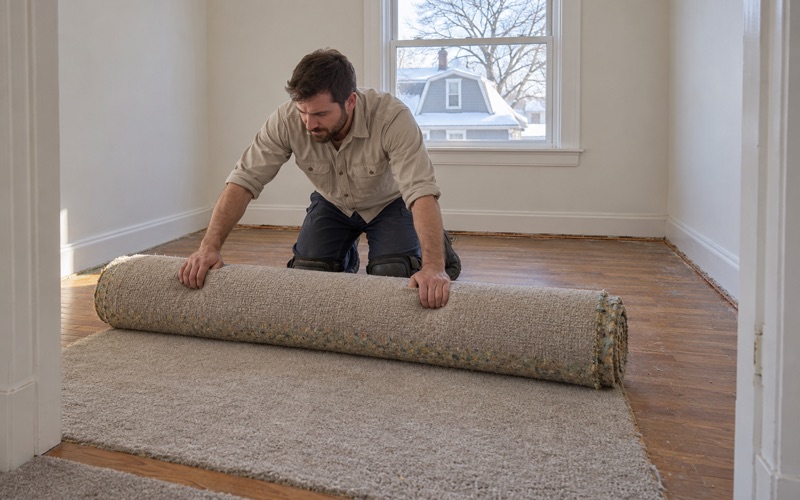
When we lift carpet in a Back Bay unit, we expect a tack strip line around the walls, staples and carpet pad residue, and boards that may not have been seen in decades. Some of those boards turn out to be eastern white pine or heart pine; others are oak, or a later replacement layer.
Softwood is not unworkable. Pine refinishes well when there is enough wood left, but it dents and cuts faster than oak, so the grit sequence starts gentler and stops sooner. Knowing which species sits in which room is what keeps the estimate honest.
Clues That a Floor Has Been Changed
Board direction that shifts at a doorway, a strip of newer wood where a wall once stood, or a square face-nailed plug where a radiator pipe came through all tell us someone has worked on the floor before. In buildings divided into separate units, those changes are common, and we map them before we price anything.
Old resilient floor tile and black mastic deserve their own warning. If we find either under carpet or linoleum, we identify it before anything is sanded and leave that layer for the trade that handles it.
Looking for wood-flooring closer to North End? See North End Wood-Flooring.
Soft Pine, Oak and Hardwood, Floor by Floor at 137 Beacon
The Gibson House report is unusual because it describes flooring level by level. Read from the basement up, it shows how many materials one 1860 house could hold, and why a Back Bay owner should not assume the floor in one room matches the next.
The Basement Level
According to the report, the basement floor is covered with stained, narrow pine boards, while the basement hallway retains its original stained oak flooring. That is two species on one level, separated by a doorway. The kitchen received a replacement wooden floor in the early 1980s, and the basement lavatory floor is covered with 19th-century linoleum.
For a refinishing crew, a layout like that means separate stain tests on each species. Pine and oak take the same stain very differently, so we lay samples on both, on your own floor, before a color is chosen.
The Parlor and Music Room Floors
On the first floor, the trim, woodwork and shutters are black walnut, and a red Wilton carpet from the Edwardian period covers the floor and the stairs. The first-floor lavatory has an oak floor, the back stair is built of oak, and one level up, the music room floor is covered with light-colored hardwood.
Rooms like these show where a household spent money on wood meant to be seen. When we find a lighter hardwood in a front room next to pine in a back room, we treat them as two jobs that happen to share a finish schedule.
The Upper Floors and the Fifth-Floor Linoleum
The third-floor bathroom has a light stained oak floor that appears original. At the top of the house, the fifth floor was originally covered with “battleship” linoleum, still extant in some locations, under an eight-foot ceiling lower than the other floors.
In an upper-floor unit, that history matters. A linoleum layer, its backing or its adhesive may still sit under a later covering, so we check for old residue before planning any sanding at all.
Why Most Back Bay Interiors No Longer Match
The Gibson House is valuable precisely because so few houses like it remain. The same report notes that very few single-family row houses are left in the Back Bay.
Conversions Changed the Floors
The report lists the new uses for former single-family houses as apartment buildings, institutions (mainly academic), medical offices and condominiums, and says those uses have altered the interior architectural integrity of many buildings. In our experience, the floor is where that shows: a wall moved, a kitchen or bath added, and the original boards cut, patched or covered over.
So the floor in a Back Bay condo today might be original pine, original oak, a replacement layer from a later renovation, or several of these in one unit. We do not assume pine anywhere until we have seen it.
Reading a Unit Before Quoting
We start by lifting a small, out-of-sight section of carpet or checking a closet, threshold or floor register to see board width, species and thickness. A moisture meter reading and a look at the fasteners, whether cut nails or modern flooring cleats, tell us roughly which era of work we are standing on.
Then we put what we found on paper, room by room. A written, itemized estimate lets an owner, a buyer or an association see which rooms hold which wood, and which repairs have to come before any refinishing.
Older Housing Stock Across the ZIP Code
Census figures for ZIP 02116, a labeled proxy that also takes in Bay Village and part of the South End, show 57.9 percent of homes built in 1939 or earlier. That age is why we treat the lead-safe checks and the remaining-wood measurement as standard steps here, not extras.
Refinishing and Planning a Floor Project in a Back Bay Unit
Pine and oak behave differently under a sander, and a Back Bay unit adds a building full of neighbors to the plan. We account for both before the first day of work.
Refinishing Softwood Pine
Soft pine marks easily, and older boards often show traffic lanes, nail pops, board gapping and rug shadow from decades under coverings. We sand pine with a lighter grit sequence, often finishing with an orbital sander to limit swirl marks, and stop once the surface is clean rather than chasing every dent.
For finish, we usually talk through a hardwax oil or a waterborne polyurethane, depending on how the room is used. Pine will never be as hard as oak, so the goal is a protected, even surface that keeps its age and character.
Refinishing Oak and Other Hardwood
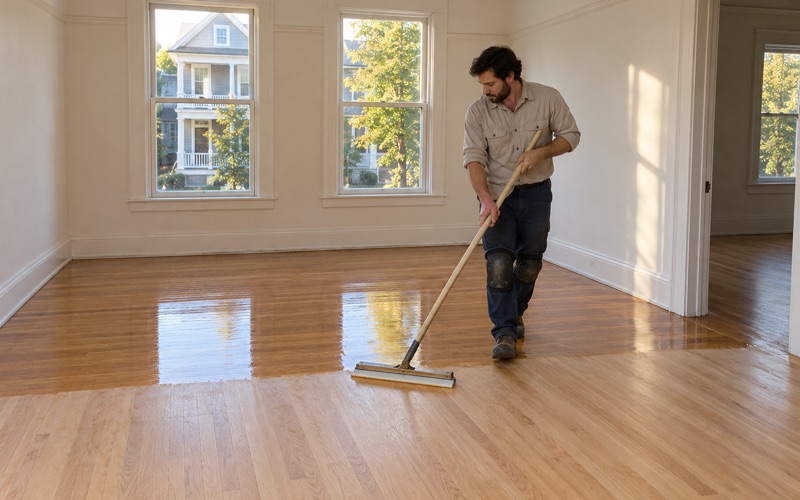
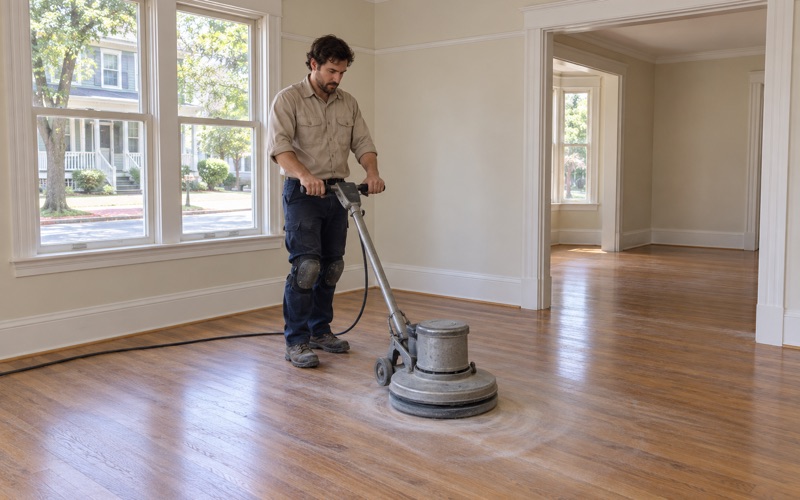
Oak and other hardwood floors take a full drum sander pass and a standard grit sequence when there is enough wood above the tongue. Where the wood is thin, a screen and recoat over sound existing finish can buy years without removing material.
Old shellac finish and wax residue are common on floors this old, and both have to come off cleanly before polyurethane will bond. Where we find peeling polyurethane from an earlier job, we work out why it failed before applying anything new.
Repairs Before the Finish
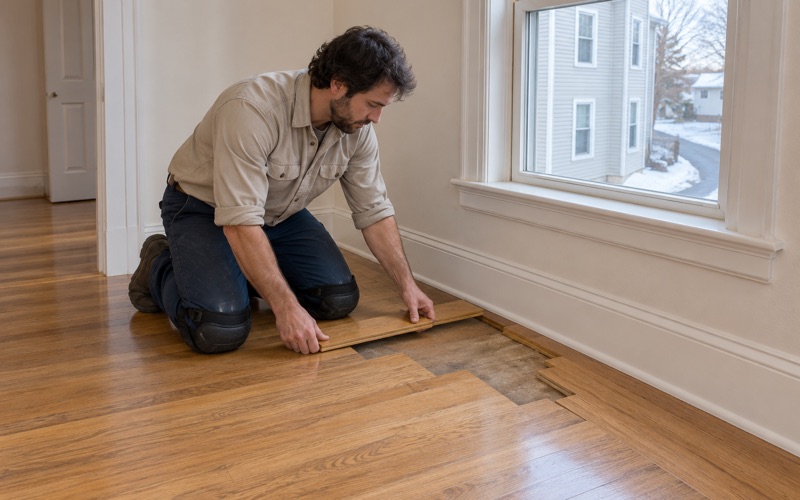
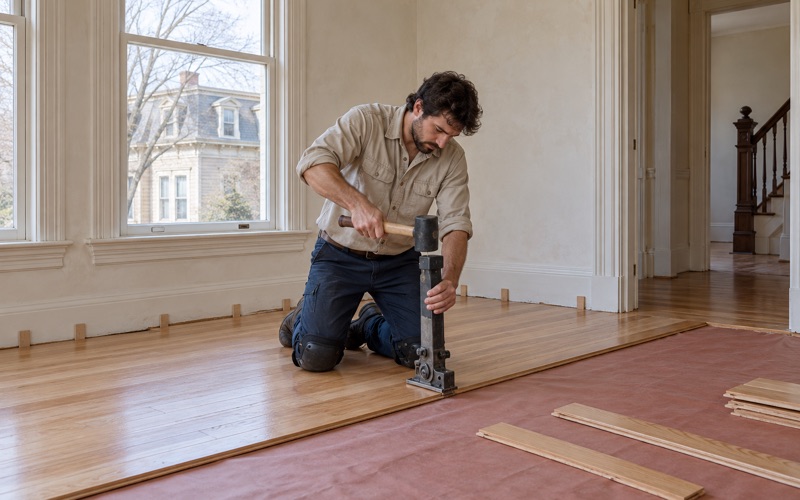
Holes left where radiators, their pipes or a wall came out are patched with boards woven into the existing floor rather than a square plug. Water damage from the unit above is traced, dried and read with a moisture meter, then documented room by room for the adjuster.
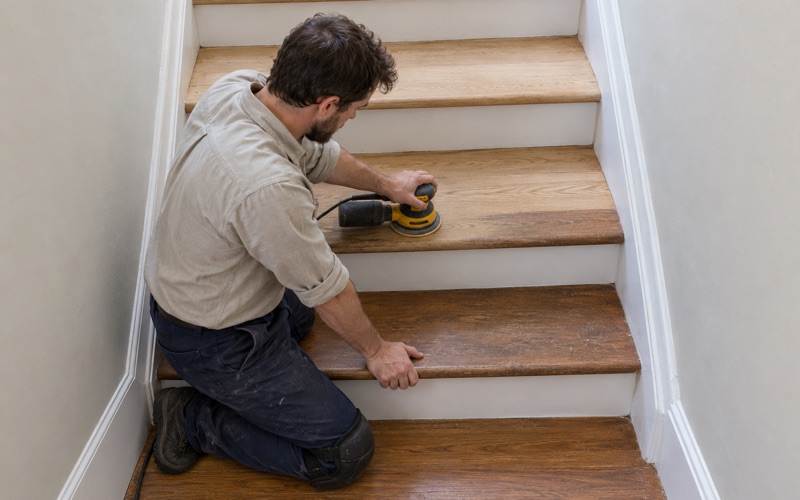
Stairs are quoted tread by tread, because a staircase is not priced by the square foot. Squeaky floorboards and loose boards are refastened from above or below, depending on what access the unit allows.
Working Inside a Shared Building
Most Back Bay jobs happen inside occupied buildings. We contain dust to the unit we are working on, seal its doors and returns, and run a HEPA vacuum throughout, while fume and drying times are planned around the people living above and below.
If a building has common hallway stairs, we schedule around every unit that uses them and write the closure dates down in advance. Association notice and work-hour rules come from the building’s documents, and a vacant rental can be sanded and finished in the gap between leases.
- 20+ Years With Wood Floors
- Written Itemized Estimates
- Free Estimates