Somerville Wood Flooring has handled wood-flooring in Boston for more than 20 years, and a large share of that work sits under apartments rented to college students. We sand, repair, recoat and refinish solid hardwood and old softwood floors for owners who rent units year after year, and we plan each job so the floor comes out tougher than it went in.
A floor in a shared student apartment lives a different life from one in an owner’s living room. Several people come and go on different schedules, chairs roll and scrape across the same few paths, and furniture gets dragged in and out every year. The finish takes that punishment first, and if nobody watches it, the wood underneath takes it next.
Our job for a rental owner is to keep that from happening on the owner’s dime more often than it has to. We read the floor before we quote, separate the worn finish from real damage, and recommend the lightest work that will actually last another stretch of tenants. Every estimate comes written and itemized, so it can sit in the property file next to the lease paperwork.
Boston’s “Five or More” Rule and the Floors It Shapes
What the zoning amendment says
On March 13, 2008, an amendment to Boston’s Zoning Code covering off-campus student housing took effect. Under it, five or more full-time undergraduates sharing an apartment, a single-family house or any other dwelling unit is a violation. The amended Sections 2 and 2A state that such a group “shall not be deemed to constitute a family,” which is how the cap works in zoning terms.
The rule counts full-time undergraduates only; the Inspectional Services Department flyer defines a student as a full-time undergraduate at a post-secondary institution. ISD’s flyer also notes that leases signed before the amendment had a grace period running to September 1, 2009, but only if the owner notified ISD. That window closed long ago, so the cap applies to every lease written today.
The owner carries the responsibility
ISD’s flyer is blunt about who answers for the unit: property owners are responsible for compliance, and violations are issued against the property owner, not the tenants. The same flyer tells owners to obtain rental apartment inspections for new tenants and to deliver clean, safe units on the day of move-in. None of this names floors, and we never suggest it does.
What it does settle is who owns the condition of the apartment. When the rental is yours, so is the worn hallway, the scratched bedroom and the kitchen threshold that went gray. We work for the owner and talk to the owner, and the estimate and the scope are written for the person who answers for the building.
Why this matters across the city
Boston is mostly a renter’s city. Of 283,374 occupied homes counted by the Census Bureau’s American Community Survey, 182,208 are rented. Many owners lease to students, by the room or by the unit, and the rule means a typical shared apartment tops out at four undergraduates.
The housing is also old. Of Boston’s 310,625 housing units, 145,114 were built in 1939 or earlier, which means plenty of older wood floors underfoot, often narrow red oak strip, eastern white pine or fir. Old wood can be sanded again, but not endlessly, and every full sanding spends some of what is left above the tongue.
Looking for wood-flooring closer to Dorchester? See Wood-Flooring in Dorchester.
Finishes That Hold Up When Four People Share a Boston Unit
Choosing a finish for heavy shared use
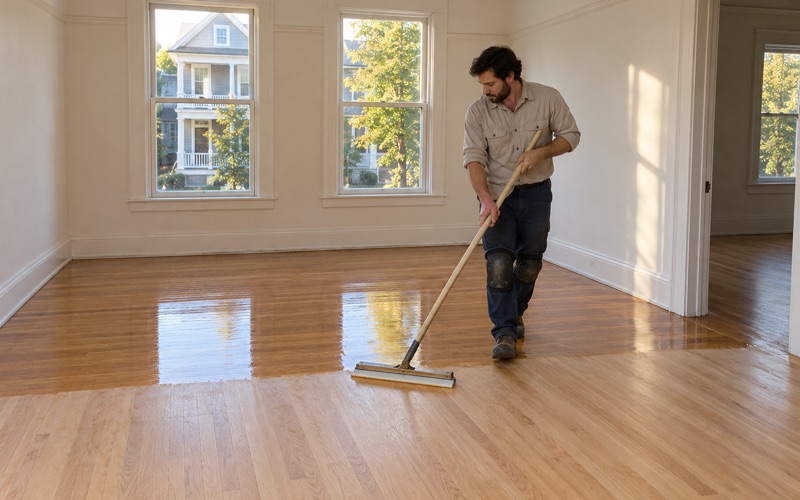
Four people sharing a unit means four sets of shoes, four desk chairs and a lot of kitchen traffic. For rental floors we usually recommend a hard-wearing waterborne polyurethane in several coats, which builds a tough film without the strong lingering odor of oil-modified polyurethane. It also dries faster, which matters when neighbors share the building.
Oil-modified finishes still have a place, especially where an owner wants the warmer amber tone on old red oak, and we explain the tradeoffs honestly. Every finish we use is chosen to fit the Massachusetts VOC limits for wood coatings, and we plan fume and drying times around the households living above and below.
Sheen, color and how wear shows
Sheen level changes how quickly a rental floor looks tired. A high gloss shows every scuff and grit scratch in a sunny room, while a satin or matte finish hides light wear and makes traffic lanes far less obvious between recoats. For student rentals we usually steer owners toward the lower end.
Color matters the same way. A very dark stain shows dust, pet hair and pale scratches through the finish, and a natural or light-medium tone forgives more. We lay stain and sheen samples on your own floor before you decide, because the same product reads differently on pink red oak than on old pine.
The small things that protect a finish
A finish lasts longer when grit stays off it. We point out where felt pads on chair legs, mats at entry doors and runners on long hallways will do the most good in a shared unit, since those spots wear first. Those cheap steps stretch the time between visits.
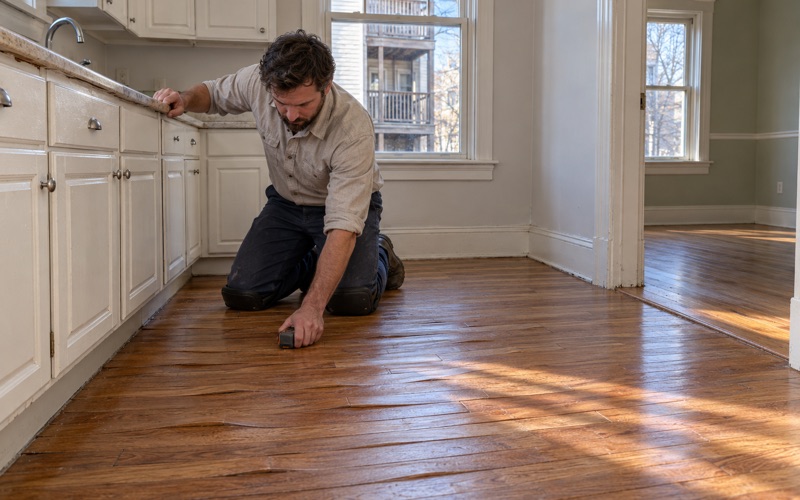
We also look hard at the kitchen and bath thresholds, where water and grit meet the wood. A thin spot there is usually the first place a rental floor turns gray, and catching it during a recoat is far cheaper than replacing boards later.
Recoat or Refinish: Keeping a Busy Rental Floor Off Bare Wood
The case for a screen and recoat
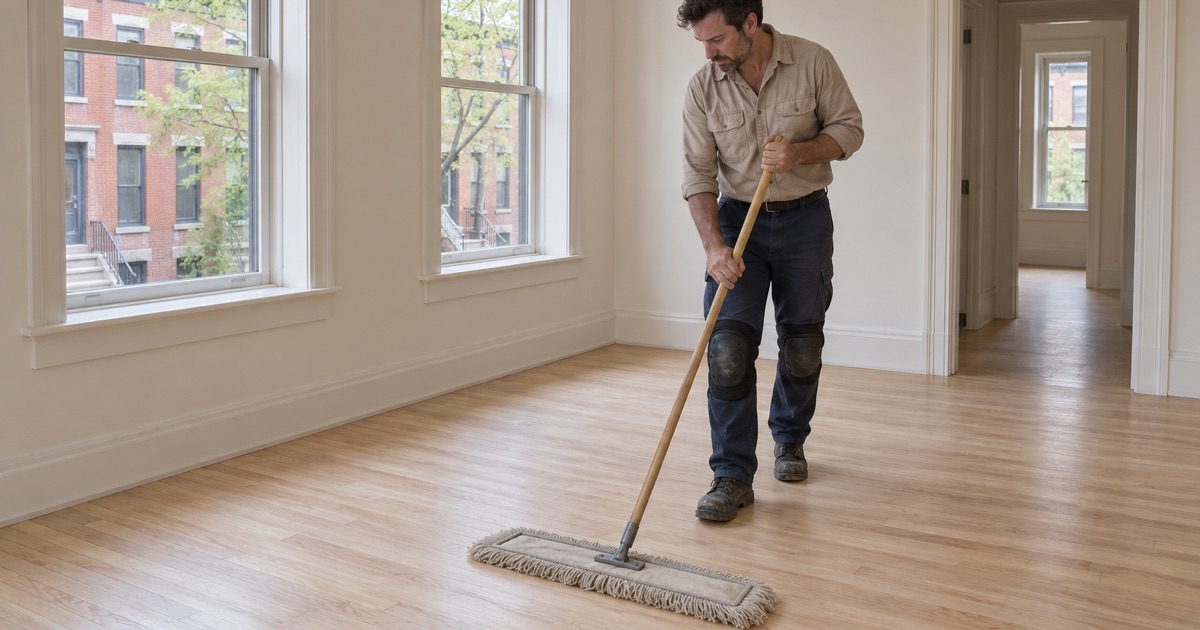
As long as wear stays inside the finish, a floor does not need sanding. A screen and recoat abrades the existing coating lightly, cleans it with a HEPA vacuum and adds fresh coats on top. The wood stays untouched, the job is quicker than a full refinish, and no wood is spent.
For a unit rented to students every year, that is often the smartest rhythm: recoat on a regular cycle so the traffic lanes never wear through to bare wood. The trick is timing it before the film is gone, because once the gray patches appear, a recoat will not bond to wood that has been worn and soiled.
When a full sanding is the right call
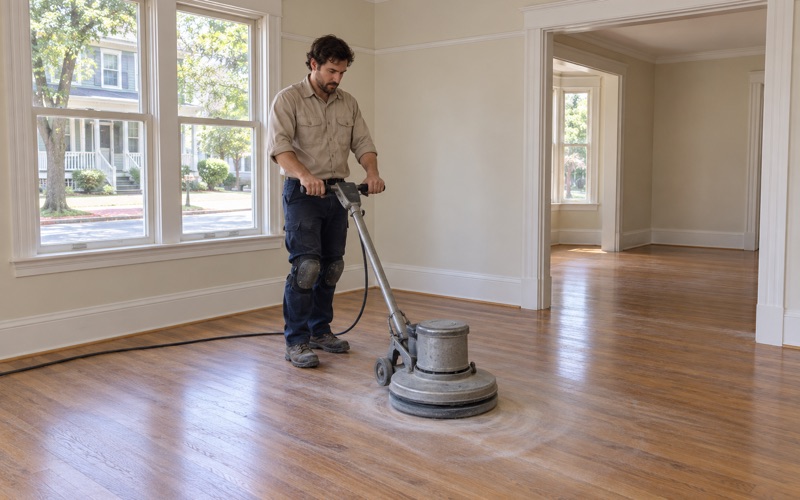
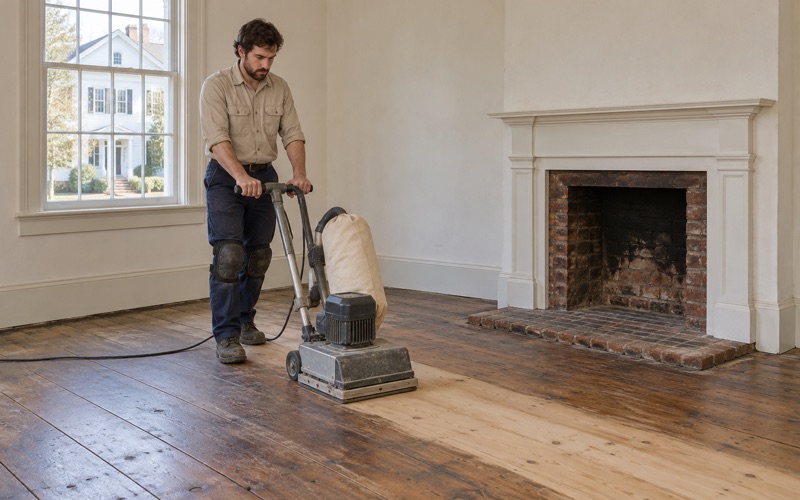
Some floors are past recoating. Deep scratches through the color, gray traffic lanes, peeling polyurethane, wax residue under the finish or a patchwork of old repairs all call for sanding to fresh wood with a drum sander and orbital sander through a full grit sequence. On old pine and narrow red oak strip floors, we check how much remains above the tongue before we start.
That check decides how aggressively we cut. A floor sanded too many times shows tongues or nail heads, and a heavy-handed sanding on a thin floor can end its life. Where wood is thin we cut lightly and lean on a good finish system so the floor survives several more tenancies.
Lead, mastic and older units
With so much of Boston’s stock built long before 1978, we check the build year and any painted surfaces before sanding, because Massachusetts runs its own lead-safe renovation rules for homes built before 1978. Painted borders, old stair risers and baseboards can all carry lead paint that sanding dust would spread.
We also look for old resilient floor tile and black mastic in kitchens and back halls. Those are identified before anything is sanded and left for the right trade. Throughout the job, dust stays in the unit being worked on, with doors and returns sealed so it does not travel to the neighbors.
Wear or Damage? Reading a Boston Student Apartment Floor
Ordinary wear from shared living
A lot of what owners worry about at the end of a lease is ordinary wear. Traffic lanes, light scratches from chair casters, a rug shadow where furniture sat, and dulled finish in front of the stove are what four people living somewhere produce. Most of that comes out with a screen and recoat or a sanding.
Seasonal movement is not damage either. Winter gaps between boards open when the heat runs and the air dries out, then close again in humid months. We explain that to owners so a normal floor is not treated as broken.
Signs of real damage
Some marks go deeper. Dark water stains around radiators, sinks and windows, pet urine stains that turn black in the grain, and boards that are cupping, crowning or buckling usually point to moisture rather than wear. We read those areas with a moisture meter and find the source before recommending any repair.
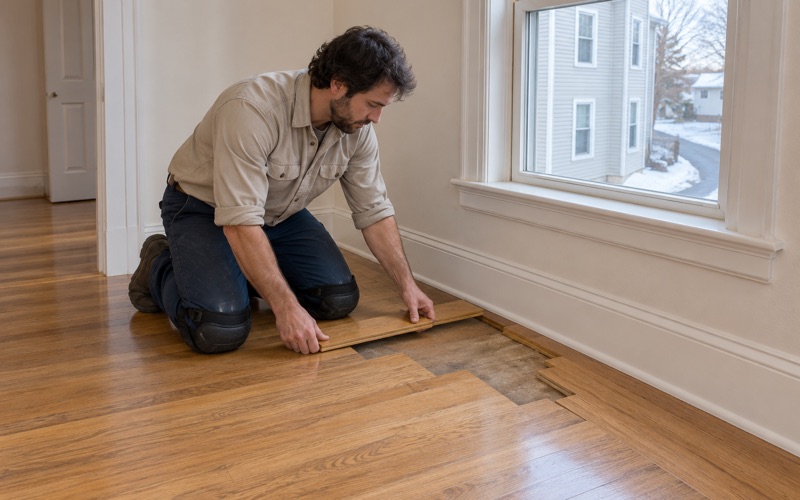
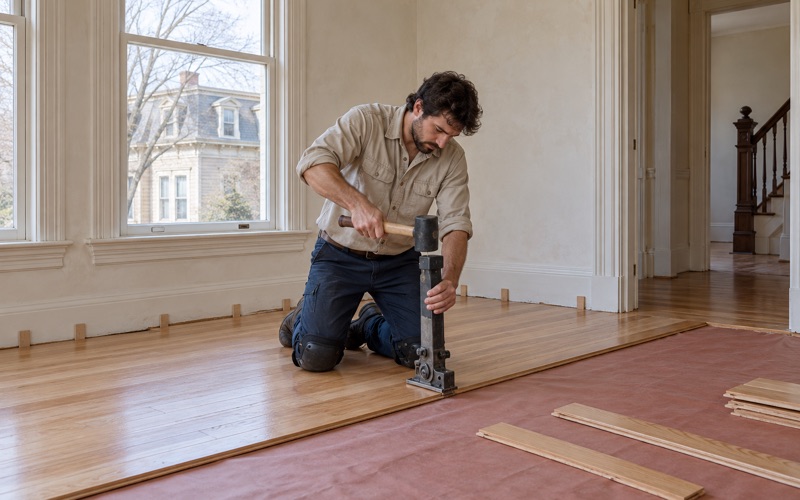
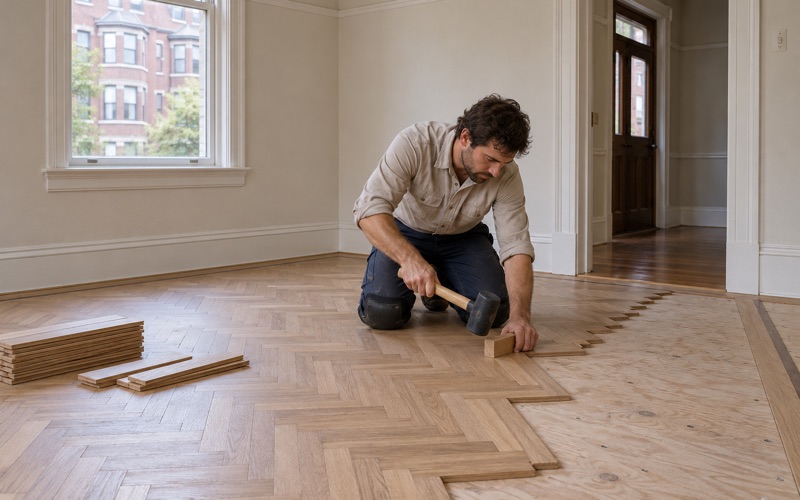
Other damage is mechanical: gouges, burns, split boards, nail pops and squeaky floorboards that have worked loose. Damaged boards can be cut out and replaced with a weave-in repair so the new wood blends with the old, and we patch holes where radiators, pipes or old walls once stood the same way.
What the written estimate records
We separate wear from damage, room by room, in our written estimate. That gives an owner a clear picture of what was ordinary aging of the finish and what needed carpentry, which is useful to keep with the building’s records for the unit. We describe what we see; how an owner handles it with a tenant is the owner’s decision.
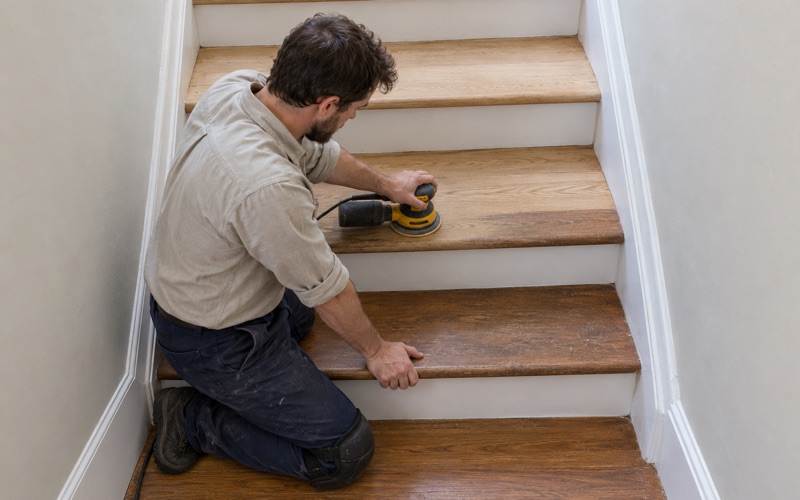
Stairs inside a unit or in a common hallway are quoted tread by tread, because a staircase is not priced by the square foot, and hallway work is scheduled around every unit that uses those stairs. If the floor in your Boston rental is starting to show the year it has had, we will walk it with you and tell you whether it needs a recoat, a sanding or a repair.
- 20+ Years With Wood Floors
- Written Itemized Estimates
- Free Estimates