Somerville Wood Flooring has spent more than 20 years on wood flooring in Brookline, and this page is written for one group of owners in particular: people who own the condominium they live in. That changes the job. The floor is not being freshened for a tenant or dressed up for a listing photo; it has to serve the household standing on it today and hold up for whoever owns the unit next.
So we start with the floor itself rather than a price per square foot. We walk every room, read the finish, check how much wood is left above the tongue on old strip flooring, and look at the stairs, thresholds and any patched spots where a radiator or wall once stood. The estimate you get is written and itemized, line by line.
We also plan the work around the building. In a condominium that means reading the association’s notice and work-hour rules from the documents, sealing doors and returns so dust stays in your unit, and choosing a finish whose fumes and drying time suit the people on the other side of the wall. We plan every job here on the assumption that your household stays put.
Floors in Brookline’s Affordable Condominiums
152 owner-occupied units in a much larger program
A Town of Brookline presentation on affordable housing counts 2,050 deed-restricted affordable units, equal to 7.4 percent of the town’s 27,742 housing units. The Brookline Housing Authority holds 895 of them, non-profit sponsor-owners 633 and private developers 370. The remaining 152 are affordable condominiums, owned by the households that live in them.
Those 152 units are the part of the program where the owner, not a housing authority or a property manager, decides when the floors get attention. That is who this page is for. If you own one, the decision about a recoat or a full sanding falls to you, along with the cost, the timing and the rooms you give up while the work is done.
Principal residence, no leasing
According to the town’s information for homeowners of affordable units, buyers purchase below fair market value in exchange for occupying the unit as a principal residence. The town prohibits leasing the units short- or long-term, or using them as temporary lodging, and it monitors permanent residency every year.
For floor work this matters in a plain way: you live there, and there is no vacant gap between leases to work in. Every plan we make for a deed-restricted unit assumes the household stays, so the real questions become which rooms can be closed, for how long, and where everyone sleeps while the finish cures.
The April 15 certification and the resale cap
Owners return an Annual Certification form to the town by April 15 each year. A deed-restricted unit also resells for no more than a maximum resale price, and resales are marketed by lottery to qualified first-time, income-eligible buyers. Refinancing is allowed under certain circumstances, through the town or a state or federal monitoring agent.
The town’s page does not say how improvements are treated in that resale figure, and we do not guess. If you are weighing a larger floor job partly with a future sale in mind, ask your monitoring agent before you sign anything with us. What we can tell you is what the floor needs and what each option costs, in writing.
Old buildings, old floors
More than half of Brookline’s housing units, 51.7 percent, were built in 1939 or earlier, so a deed-restricted condo can sit in a prewar building as easily as a newer one. Older units tend to carry red oak strip flooring, sometimes maple in kitchens or back rooms, and now and then parquet laid over an earlier floor.
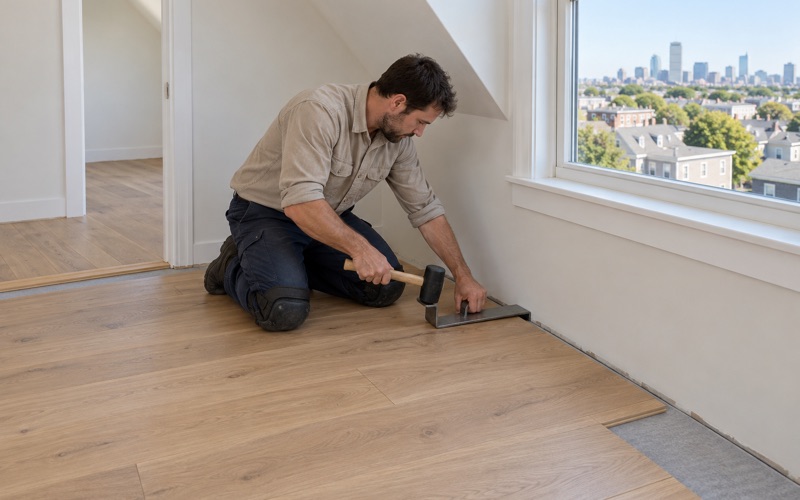
Newer buildings more often have prefinished boards or an engineered wear layer, which changes what is possible. A thin engineered wear layer may take one light sanding or none at all, while solid hardwood laid tongue and groove can usually be sanded several times over its life. We identify which you have before anyone talks about a full refinish.
Looking for wood-flooring closer to Melrose? See Wood-Flooring Services in Melrose.
Keeping a Deed-Restricted Brookline Condo Maintained
What “maintained periodically” looks like on a floor
The same town page says units should be maintained periodically. On a wood floor, periodic maintenance mostly means renewing the finish before traffic wears through it to bare wood. Once traffic lanes go gray and the wood starts absorbing dirt and water, a light job turns into a sanding job.
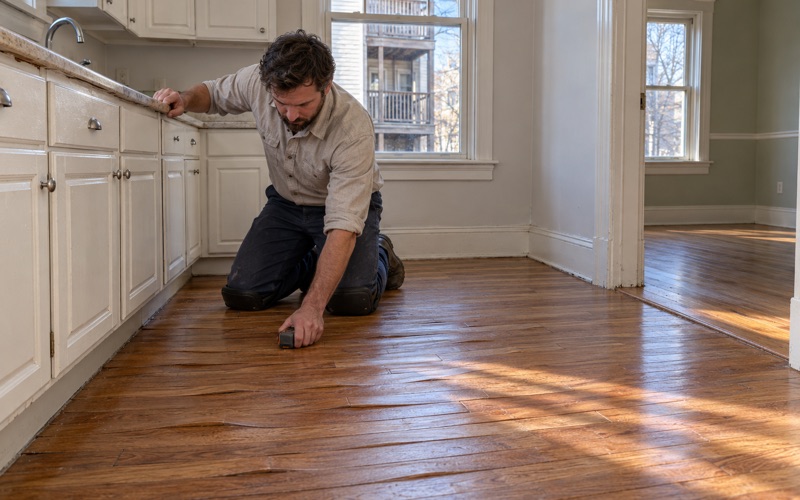
We look for the early signs: dull paths from the entry to the kitchen, rug shadow where a carpet blocked the light, water stains near radiators and sinks, and the fine scratching a dog leaves in a hallway. Caught early, most of that is a finish problem rather than a wood problem, and a finish problem is the cheaper one to own.
Gaps, squeaks and movement
Winter heat dries a floor out, and winter gaps between boards are normal in older strip flooring. They usually close again in the humid months. Board gapping that stays open year-round, or cupping, crowning and buckling, points to a moisture source, and we check with a moisture meter before recommending anything.
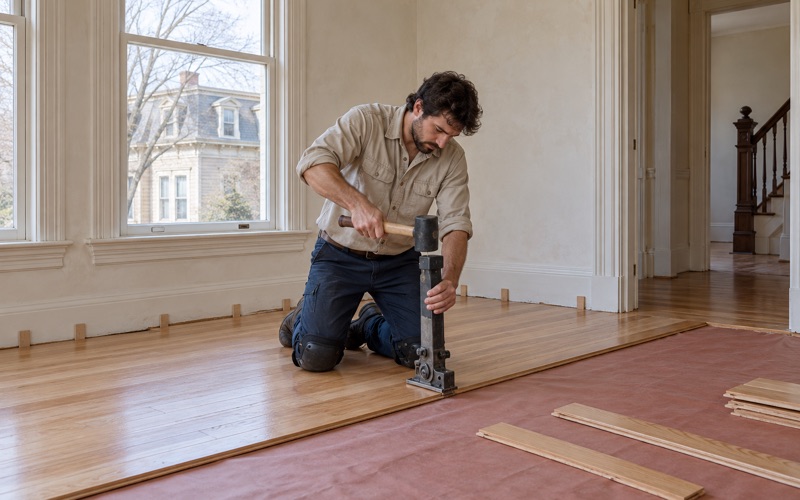
Squeaky floorboards and nail pops are common in prewar condos, where the floor may be face-nailed with cut nails over an old subfloor. Many can be quieted from above with fresh fasteners set below the surface. We list them in the estimate so they are fixed before finish goes down rather than after.
Pests and patches in older wood
Small round exit holes with fine powdery frass can point to powderpost beetle or old house borer, and carpenter ants leave their own signs near damp framing. We flag what we see and tell you which trade to call; we do not sand over an active problem.
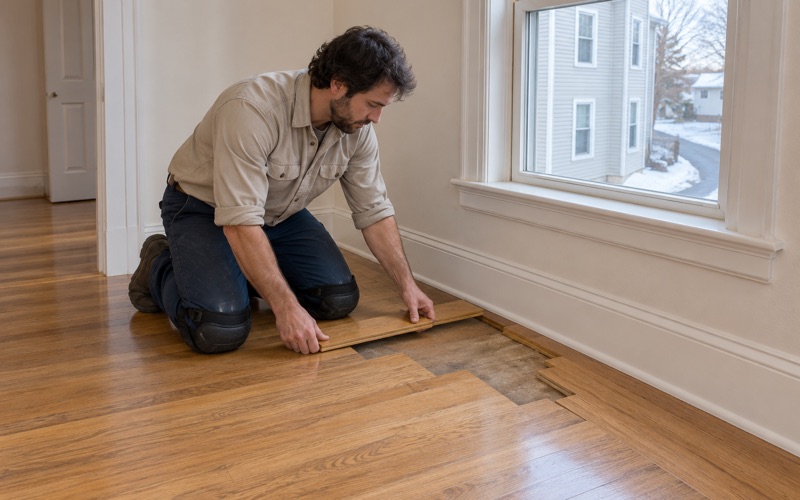
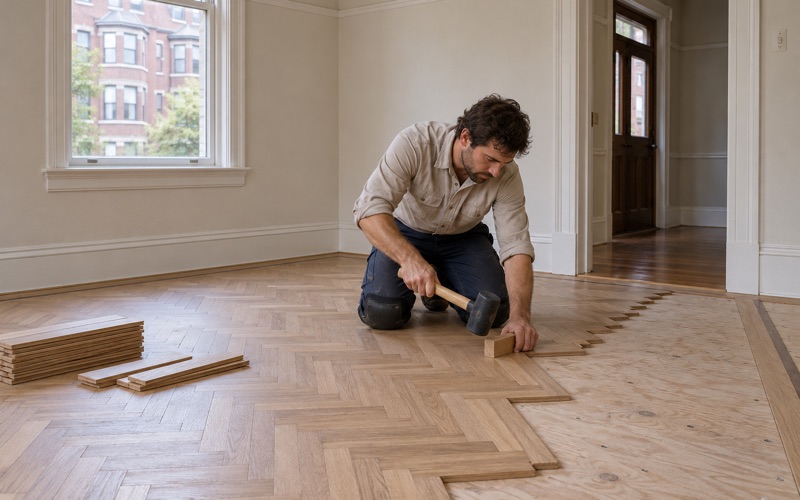
Where a radiator, its pipes or an old partition came out, the hole left behind is patched with boards woven into the existing floor. A weave-in repair staggers the new boards’ end joints among the old ones, so the patch reads as part of the floor rather than a square plug cut into it.
Recoat, Repair or Refinish: Choosing the Right Job
Screen and recoat
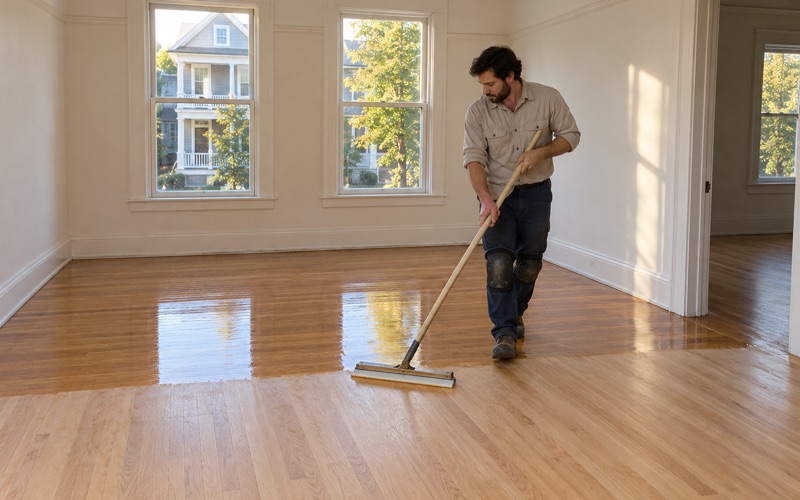
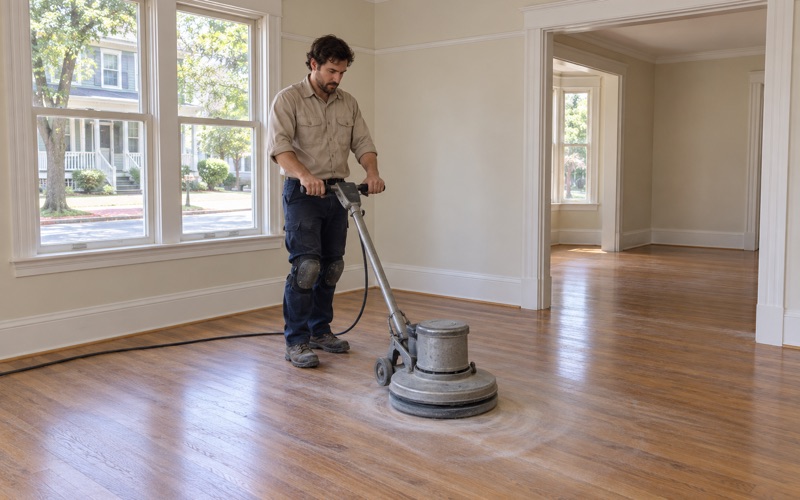
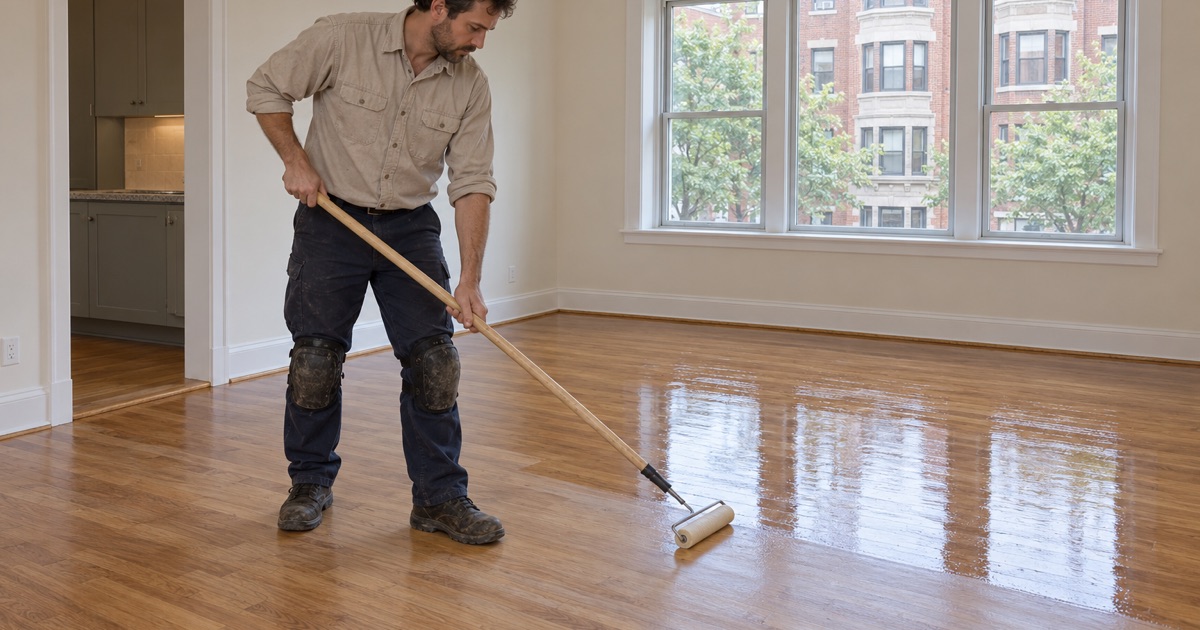
If the existing finish is intact and only worn on top, a screen and recoat is usually the right call. We abrade the surface with a buffer, clean it with a HEPA vacuum and apply a fresh coat. It removes no wood, and in an owner-occupied unit it often means only a room or two closed for a day.
It will not work over wax residue, which blocks adhesion, and it will not fix peeling polyurethane or stains that have reached the wood. We test the finish before quoting a recoat, because a coat that fails to bond leaves you worse off than the floor you started with.
Full sanding and refinishing
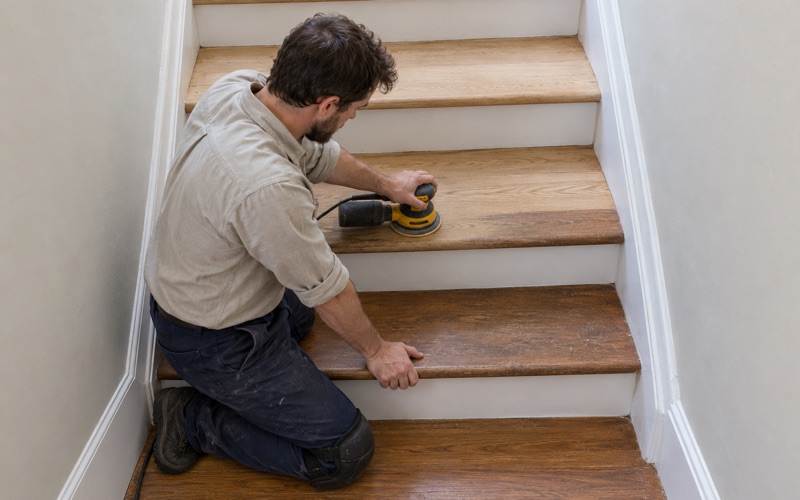
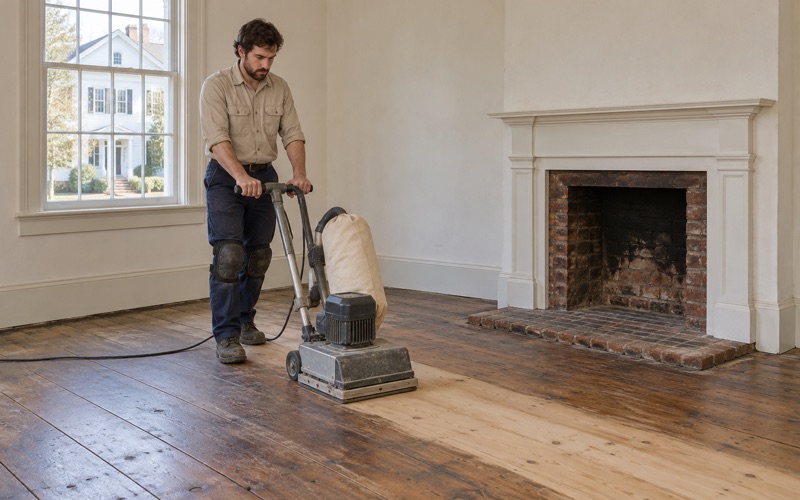
When the finish is worn through to bare wood, or there are pet urine stains and deep water stains, the floor needs a full sanding. We use a drum sander and an orbital sander through a grit sequence matched to the species, then lay stain and sheen samples on your own floor so you choose a color in your own light.
Red oak often comes up as pink red oak under a clear coat, while older floors that yellowed under an oil finish can read as orange oak. A sample on the floor settles that faster than any photo. We confirm how much wood remains above the tongue before sanding, because that sets how many more sandings the floor can take.
Finish choice when you are living there
Waterborne polyurethane dries faster and smells less, which suits a household staying in the unit. Oil-modified polyurethane gives a warmer tone but needs longer to cure, and hardwax oil is easy to spot-repair later. Every finish we use is chosen to fit the Massachusetts VOC limits for wood coatings.
Because so much of Brookline’s housing predates 1978, we check the build year and any painted surfaces, such as baseboards and thresholds, before sanding. Massachusetts runs its own lead-safe renovation rules, and we plan the work around them rather than discovering the issue halfway through a room.
Old tile under the carpet
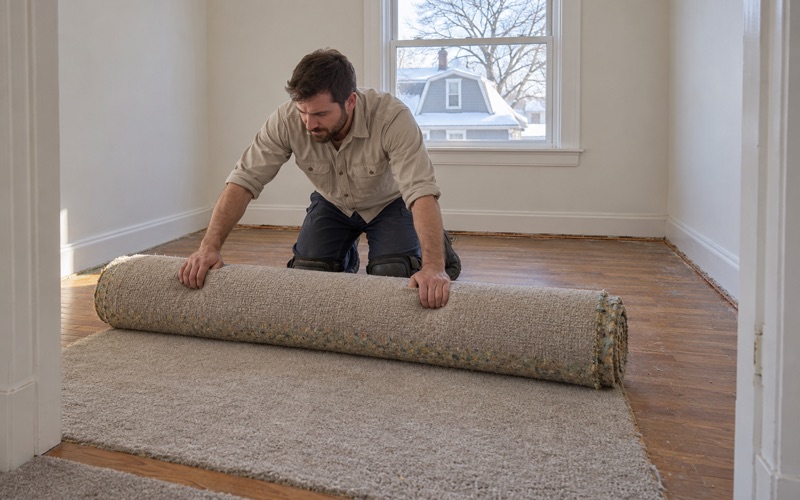
Some units hide resilient floor tile and black mastic under the carpet pad and tack strip. We identify that material before anything is sanded and leave it for the right trade, then pick the wood work back up once that layer is properly handled.
Getting a Brookline Affordable Condo Ready for the Next Buyer
A floor that serves the next household
When you sell, the unit goes to a qualified buyer and the price is capped. That makes a floor that is sound, quiet and simply finished more useful than an expensive change of style. A clean refinish in a natural or light stain and a satin sheen level suits most households.
We would rather tighten loose boards, fill the radiator hole and renew worn stair treads than talk you into new wide plank over sound old oak. Solid hardwood that has been looked after keeps working for decades, and that is the floor the next owner inherits from you.
Stairs, timing and paperwork
Interior stairs in a two-level unit are quoted tread by tread, with treads, risers and stair nosing listed separately, because a staircase is not priced by the square foot. If the building’s common hallway stairs need work, we schedule it around every unit that uses them and write the closure dates down in advance.
Plan the floor job well before listing, so the finish has fully cured before anyone walks through. You keep the itemized estimate and invoice for your own records, along with a note of the finish used, which helps the next owner when it is their turn to recoat.
- 20+ Years With Wood Floors
- Written Itemized Estimates
- Free Estimates