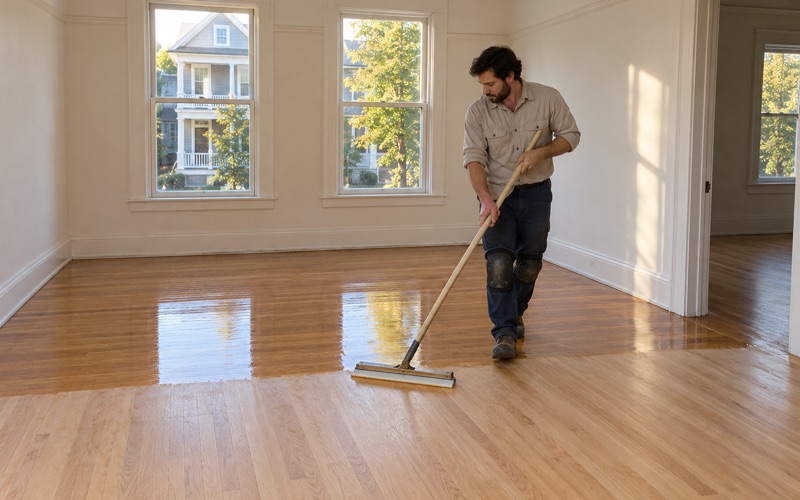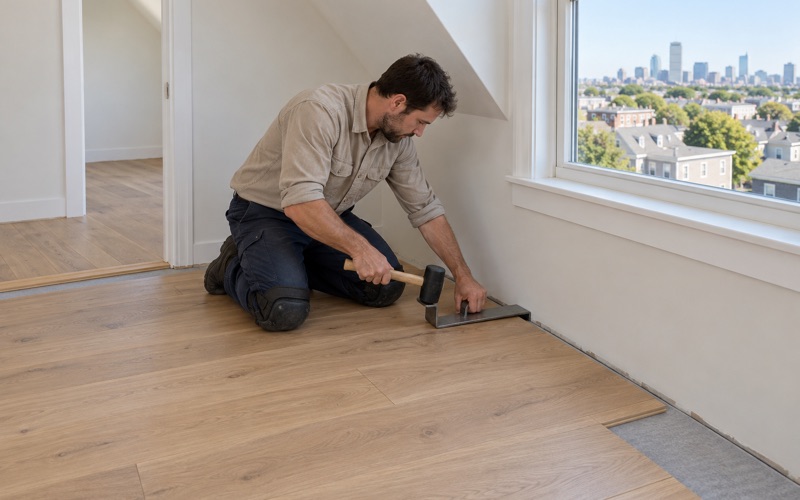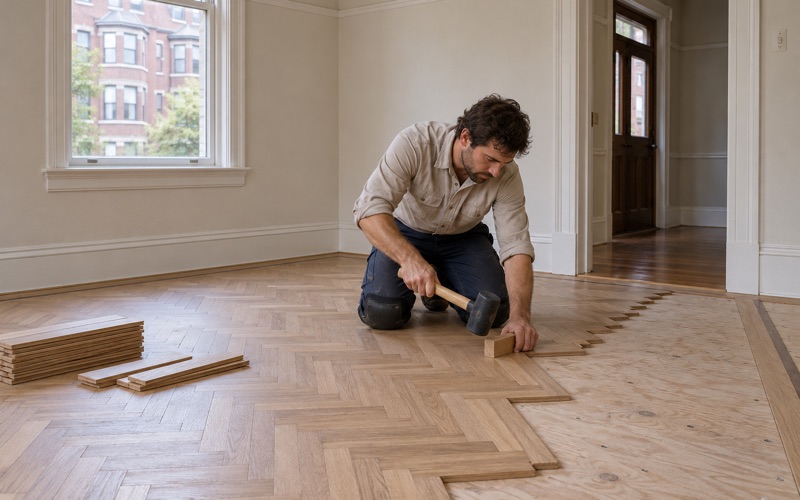
Somerville Wood Flooring brings 20+ years of sanding, finishing and repair to wood-flooring in Charlestown, and the call we hear most often here is about a floor that looks fine along the walls and tired in the middle of a bright front room. The finish has dulled where the light lands, the boards have shifted color, and a rug that sat in one spot for years has left a crisp outline behind.
We refinish, recoat and repair solid hardwood and old softwood floors in rowhouses, two-family and three-family houses, and condominium units. Before any machine runs, we check the build year and the painted trim, since Massachusetts keeps its own lead-safe renovation rules for homes built before 1978, and we confirm how much wood is left above the tongue on old strip and pine boards.
When the work sits inside one unit of a shared building, we seal doors and returns so dust stays where we are working, and we plan finish fumes and drying times around the people upstairs and down. Condo jobs follow the association’s notice and work-hour rules as its documents state them, not as we assume them.
Sunny Rooms and the Street Trees Outside Them
What the Canopy Numbers Say
How much light reaches a floor depends heavily on what stands between the window and the sky. In a 2019 Charlestown Patriot-Bridge report, a speaker estimated the neighborhood’s tree canopy at about 10 percent as of 2017. That is a hedged, attributed estimate rather than a measured study, but it fits what many street-facing rooms show us: plenty of direct light and not much filtering it.
Boston’s first street-tree inventory, reported in 2021, found honeylocust made up 35.0 percent of Charlestown’s street trees, followed by littleleaf linden at 11.4 percent and pin oak at 10.8 percent. An inventory tells you which species line the curb, not how much shade lands in a particular parlor, so we look at the actual window, which way it faces and the tree outside it before we talk about finishes.
More Trees Are Coming, Slowly
The city budgeted $500,000 for its Urban Forest Plan and set out to double planting to 2,000 trees a year citywide. A newly planted street tree takes years to cast meaningful shade, so a floor refinished this year will probably live through a long stretch of strong light. We choose finish and sheen with that in mind.
Old Rooms, Old Boards, Big Front Windows
In ZCTA 02129, which covers Charlestown, 5,080 of 10,107 housing units were built in 1939 or earlier, and 1,610 are one-unit attached homes. Charlestown was burned in 1775 and rebuilt, much of it in brick and wood rows. Those older rooms often hold red oak strip flooring, eastern white pine or heart pine, sometimes under layers of shellac, wax and later polyurethane, and the front rooms with tall street-facing windows are where sun wear shows first.
Rowhouse layouts concentrate the problem. A narrow house with windows only at the front and back puts most of its daylight into those two rooms while the middle of the plan stays dim. One level can carry three different stories: a faded, worn front parlor, a darker middle room still close to original, and a back room shaped by its own exposure. We quote each room on what it needs rather than treating the whole level as one surface.
Looking for wood-flooring closer to Medford? See Medford Wood-Flooring.
How Strong Sun Changes a Hardwood Floor
Color Shift in the Wood
Light changes wood color over time. Red oak drifts warmer, and a floor that started as pink red oak under a clear oil-based coat can read as orange oak years later. Maple and white oak amber as well, and old pine deepens toward honey. None of this is structural damage, but it becomes obvious the moment a rug or a sofa moves and leaves a pale rug shadow on the boards.
Finish Wear Where the Light Lands
The coating takes the other half of the beating. On a sunny floor the finish tends to dull first in the band nearest the window, and when that band is also the path from the front door, traffic lanes appear sooner than they would in a shaded back room. Older coatings can turn chalky, crack, or show peeling polyurethane where a newer coat never bonded to the wax residue underneath.
Telling Finish Wear From Wood Wear
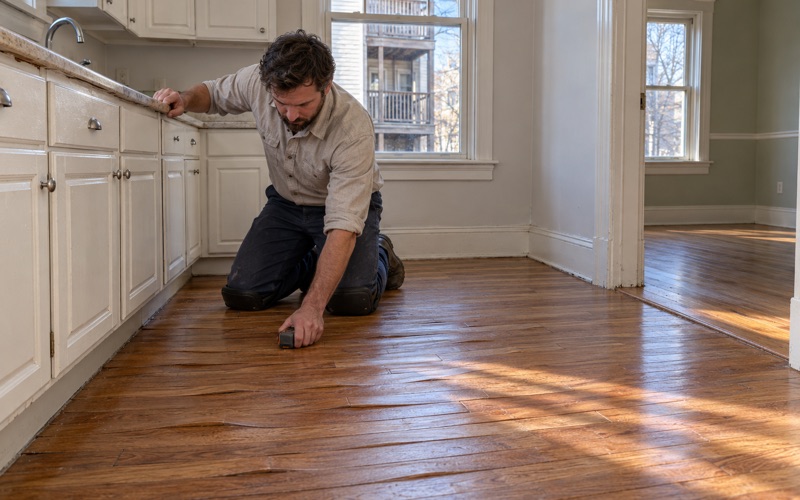
A quick check tells us which problem we are looking at. Where a drop of water beads on the surface, the finish is still sealing; where it darkens the wood and soaks in, the coating has worn through. A floor that beads everywhere but looks dull is a recoat candidate, while one that drinks water in the traffic lanes, or has gone gray there, needs sanding to clean wood. We also sight along the boards at a low angle in daylight, because sun-worn finish shows as a flat patch against the gloss that survived under furniture.
Gaps and Movement Near Bright Windows
Direct sun warms and dries the boards closest to a window faster than the rest of the room, which can widen board gapping once the heat comes on. Winter gaps that close again in summer are normal seasonal movement for solid hardwood. Gaps that stay open, or edges lifting into cupping, point to a moisture source, and we check those with a moisture meter before recommending any sanding.
Rugs, Shades and Evening Out Wear in a Charlestown Rowhouse
Managing the Light You Have
Window treatments do the most to slow sun change. Shades, sheers or UV-filtering film on street-facing windows cut the direct light reaching the floor during the brightest hours, and drawing them while a room sits empty helps more than most owners expect. A north-facing room needs little of this; a bright front parlor needs a lot.
Moving Rugs and Furniture
Area rugs protect the wood beneath them, which is exactly why they leave an outline. Shifting or turning a rug every few months keeps the edge of the shadow from settling in one place. After a fresh refinish, we suggest leaving the floor uncovered for a few weeks where the finish allows, so the wood ambers evenly before rugs go back down, and using a pad made for finished hardwood rather than an old carpet pad.
Furniture placement matters too. A sofa or bookcase parked in the same spot for a decade shields a rectangle of floor the way a rug does, and the outline appears when it finally moves. Felt pads under the legs prevent scratches but do nothing about light, so the only cures for a fixed outline are time in the sun or a sand down to fresh wood.
Owners, Renters and Shared Buildings
Charlestown’s occupied housing is close to evenly split, with 52.0 percent owner-occupied according to the city’s Planning Department. In a two- or three-family house, that often means we finish one unit or one floor while the household above or below stays put, with the common hallway stairs and landings booked around everyone who uses them and the closure dates written down ahead of time. For a vacant rental, the goal is a floor sanded and finished in the gap between leases, ready before the next tenant moves in.
Recoating or Refinishing a Sun-Worn Floor
When a Screen and Recoat Is Enough
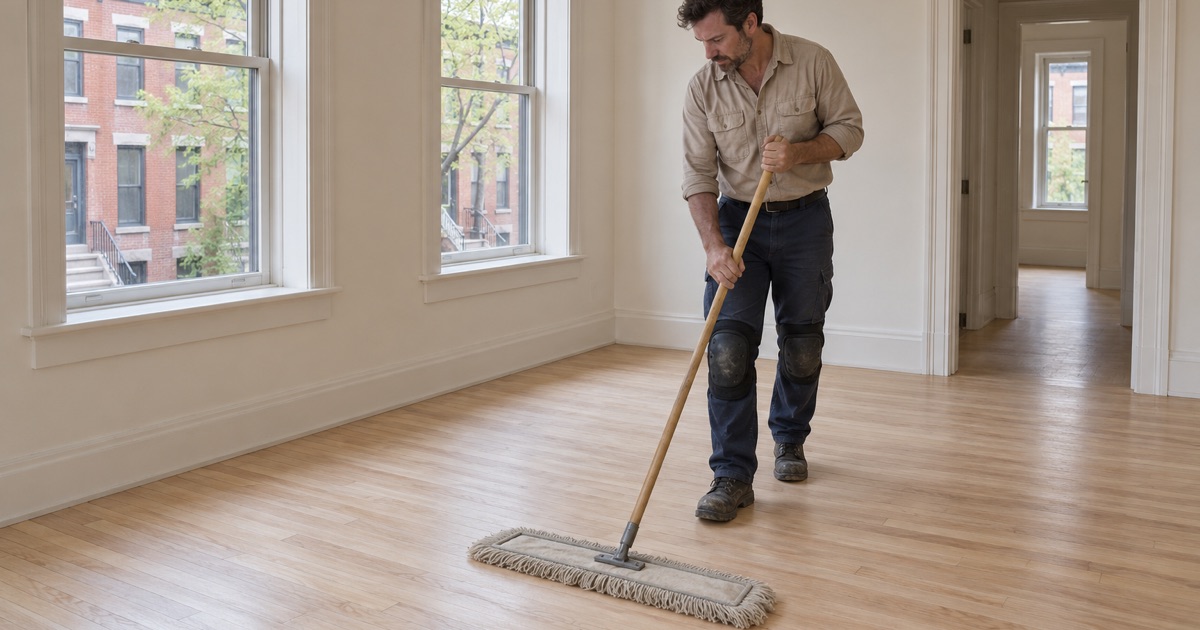
If the finish has dulled but the wood beneath is not worn through, stained or graying, a screen and recoat can restore it without removing wood. We abrade the existing coat with an orbital sander, clean with a HEPA vacuum, and apply a compatible topcoat. A recoat only works over a finish that will bond, so we test first, because wax and some older finishes rule it out. It also does not erase color change, though a pale rug shadow usually blends in as the exposed area catches up.
Timing is the other half of the decision. A sunny floor that gets a screen and recoat every few years, before the finish wears through, can go a long time between full sands, which saves wood on old boards with little to spare. Waiting until the lanes are bare turns a light recoat into a full sanding job.
When the Floor Needs a Full Sand
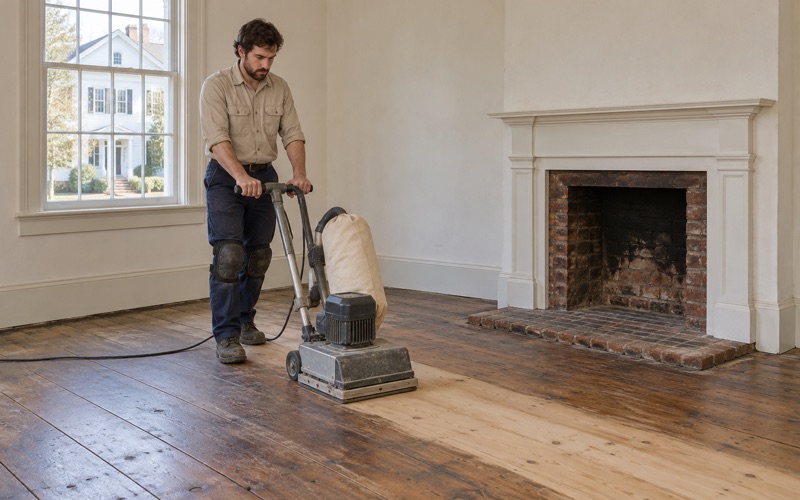
Bare wood in the traffic lanes, gray patches where water got through, peeling finish, or a sharp color difference between sunny and shaded areas calls for a full refinish. On old red oak strip and pine we measure the remaining wood above the tongue before deciding how aggressive a grit sequence the floor can take, since it may already have been sanded several times. Stain and sheen samples go down on your own boards before anyone picks a color, ideally near the window, because a sample in shade and one in full sun can look like two different floors.
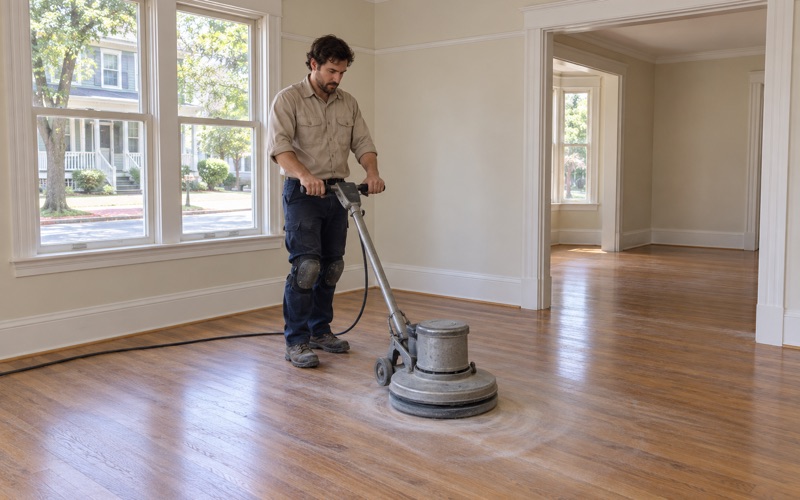
Sanding runs with dust containment in place: plastic at the doors, returns sealed, and a HEPA vacuum pass between grits, so refinishing one floor of a rowhouse does not coat the rest of it.
Choosing a Finish for a Bright Room
Waterborne polyurethane stays clearer and ambers much less than oil-modified polyurethane, which suits owners who want the floor to hold its current tone. Oil-modified finishes deepen color from the first coat and keep warming. Hardwax oil gives a low-sheen look that is easy to spot-repair where sun and foot traffic wear one area first, and a lower sheen level hides glare and scuffs better in any bright room. Whatever we apply fits the Massachusetts VOC limits for wood coatings.
Drying and cure times differ between these products, and in a shared building that matters as much as the look. Waterborne coats usually allow light foot traffic sooner and carry less odor, while oil-modified coats need longer before furniture returns. We lay out the schedule in advance so the household next door or upstairs knows when the fumes and closures fall.
Repairs While the Room Is Empty
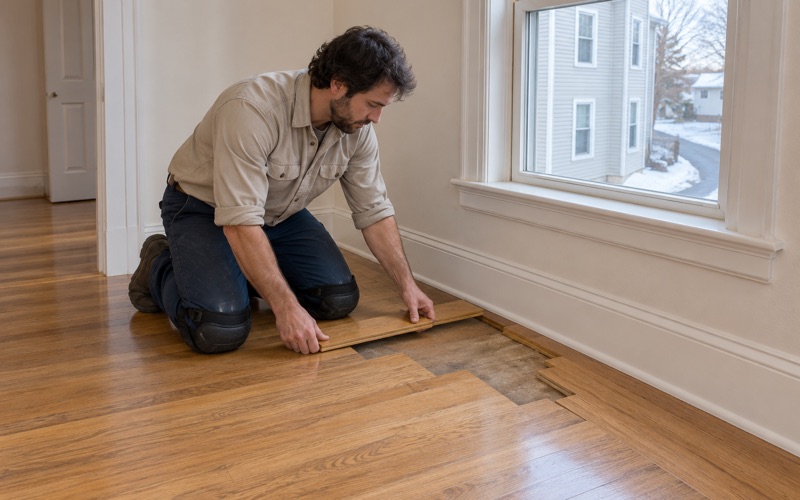
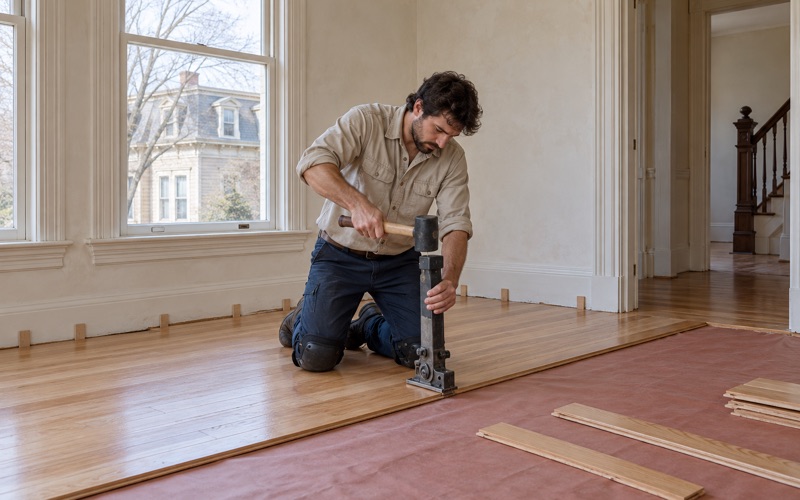
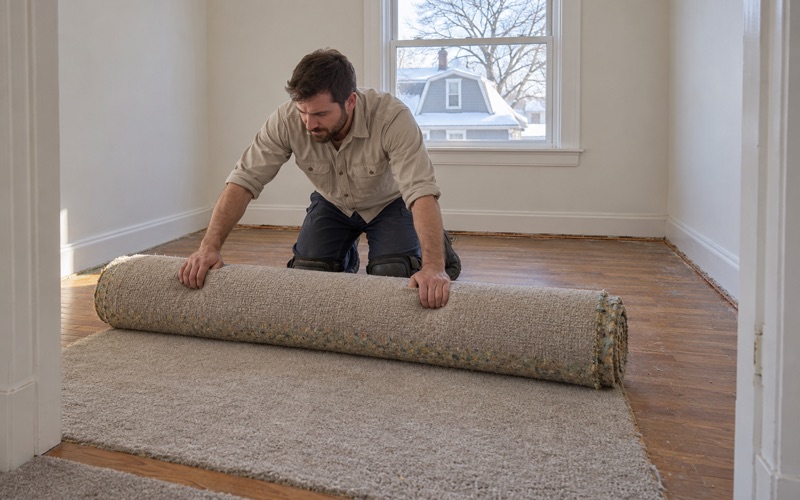
Many of these floors carry older scars too: holes where a radiator or its pipes came out, or where a wall once stood. We patch those with boards woven into the existing floor rather than a square plug. A staircase rising from a sunny entry is quoted tread by tread, since stairs are not priced by the square foot. If old resilient floor tile or black mastic turns up under carpet in a back room, we identify it before any sanding and leave it to the right trade.
- 20+ Years With Wood Floors
- Written Itemized Estimates
- Free Estimates