Somerville Wood Flooring has spent more than 20 years on wood flooring in Chelsea homes, and most of the calls we get from the city start the same way: boards that lay flat in spring now have raised edges, open seams or a new squeak by the doorway. Those are moisture symptoms, and they tell us more about the building and the season than about the wood itself.
Our work here covers refinishing, repair and new installation, but the thread running through all of it is control. We read the boards with a moisture meter before we quote, we let new flooring sit in the rooms it will live in, and we plan the finish around the people who share the walls, the stairs and the air with the unit we are working in.
That matters in a city where most households rent and most buildings hold more than one family. A tenant upstairs, an owner on the first floor and a landlord turning over a vacant unit all need the same floor fixed without the whole house shutting down, so we schedule the job one unit or one floor at a time.
Wood Floors in a City That Runs Hot
Wood is hygroscopic: it takes on moisture from the air and gives it back, swelling and shrinking across the width of each board as it does. A floor that sees mild, even conditions year-round barely moves. A floor that goes from sticky summer air to bone-dry heated air every year moves a lot, and Chelsea gives its floors more of that swing than most places.
Why All of Chelsea Counts as a Heat Island
WBUR reported in 2022 that all 2.5 square miles of Chelsea are considered a heat island, and that temperatures on some blocks can run seven degrees hotter than in less sweltering areas. It is a compact, densely built city along the Mystic River, with a lot of pavement, roofs and brick holding the day’s heat well into the night.
For a floor, that means long stretches of warm, humid air in summer, windows open on some days and air conditioners running hard on others. Each change pushes moisture into or out of the boards, and the top-floor and sun-facing units feel it first.
The Cool Block Pilot and What It Shows
The same WBUR report described the GreenRoots Cool Block pilot, which started on a block that had just five small trees; the project added 47 new trees there by 2022. CBS News reported in 2025 that GreenRoots, the city and Boston University researchers had also resurfaced streets in lighter materials, painted rooftops white and planted more than 100 trees on the block.
We mention it because it shows how much the street outside shapes the air inside. A shaded block with lighter surfaces sheds heat; a bare one bakes, and the rooms facing it ride bigger swings in temperature and humidity than a floor plan alone would suggest.
An Older Housing Stock Meets the Heat
Of Chelsea’s 14,165 housing units, 7,020 were built in 1939 or earlier, and 3,871 sit in three- or four-unit buildings. Those older buildings were not designed for central air or tight envelopes, so moisture moves through them in ways that are hard to predict room to room.
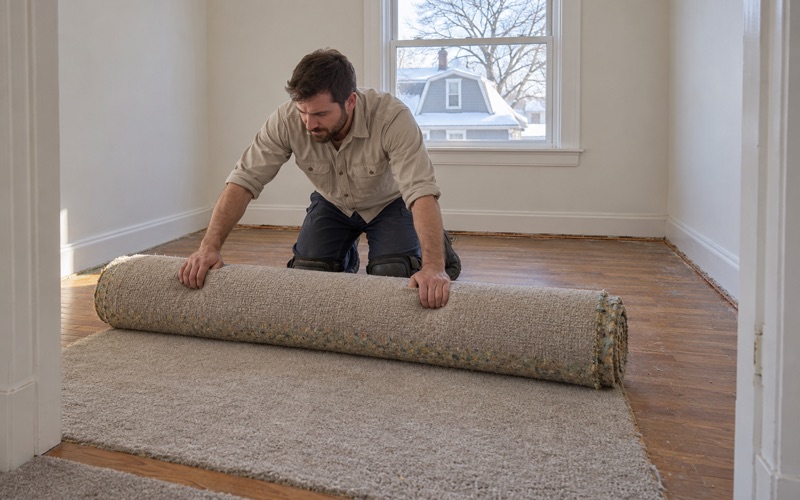
The floors in them are often red oak strip flooring or eastern white pine, sometimes covered by carpet pad and tack strip for decades. Old wood has already been through many seasons, but it still reacts to sharp swings, and a heat-island summer followed by a dry winter can open problems that were quiet for years.
Looking for wood-flooring closer to Arlington? See Wood-Flooring in Arlington.
How Heat and Humidity Swings Move Hardwood
Every board in a floor is trying to match the air around it. When the air holds more moisture than the wood, the board swells; when the air dries out, it shrinks. Tongue and groove joints and face nails hold the boards together, but they cannot stop the movement, only direct where it shows up.
Cupping in Humid Summers
Cupping is the most common summer complaint we see in Chelsea apartments. The edges of each board rise above the center, so the floor feels ridged underfoot and catches light in long stripes. It happens when the underside of the board takes on more moisture than the top, often from humid air below the floor or from a basement or unit beneath that never gets air conditioning.
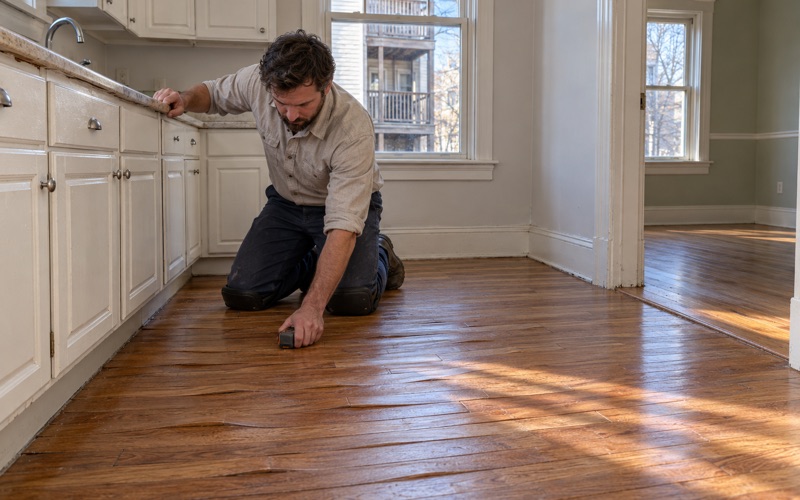
Before we do anything to a cupped floor, we take moisture meter readings across the room and compare them with the subfloor. Sanding a cupped floor flat while it is still wet is a mistake; once the boards dry, the edges drop and the floor crowns instead.
Seasonal Gaps and Winter Shrinkage
When the heat comes on in fall, the same boards give that moisture back. Winter gaps open between strips, sometimes wide enough to hold a coin, and they tend to close again by late spring. In older buildings where radiators sit against outside walls, the gaps are usually widest near the windows.
Seasonal board gapping is normal in solid hardwood and does not mean the floor has failed. What we look for is gapping that stays open all year, which points to a floor that shrank and never recovered, or boards that have pulled loose from their nails.
Squeaks, Nail Pops and Loose Boards
Repeated swelling and shrinking work the fasteners loose. Old cut nails back out a fraction, flooring cleats lose their grip, and the floor starts to talk. Squeaky floorboards in hallways and doorways are the usual first sign, followed by nail pops that catch a sock or a vacuum.
We fix squeaks from above where the floor is finished, resetting or adding fasteners into the joist and filling the holes to match. Where a ceiling below is open during other work, we can sometimes reach the problem from underneath instead.
Acclimating and Installing Floors for Chelsea’s Hot Rooms
New flooring is where acclimation pays off. Boards that leave a warehouse with one moisture content and get nailed into a room with another will move as soon as they adjust, and the floor shows it within a season.
Letting the Boards Adjust Before They Go Down
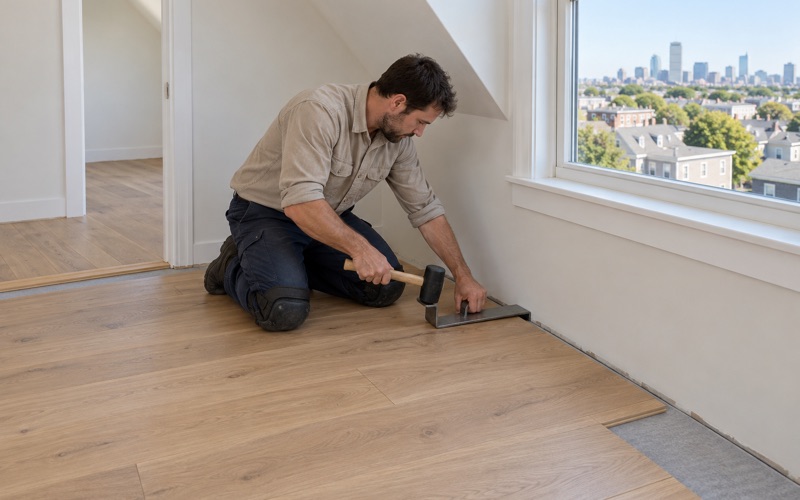
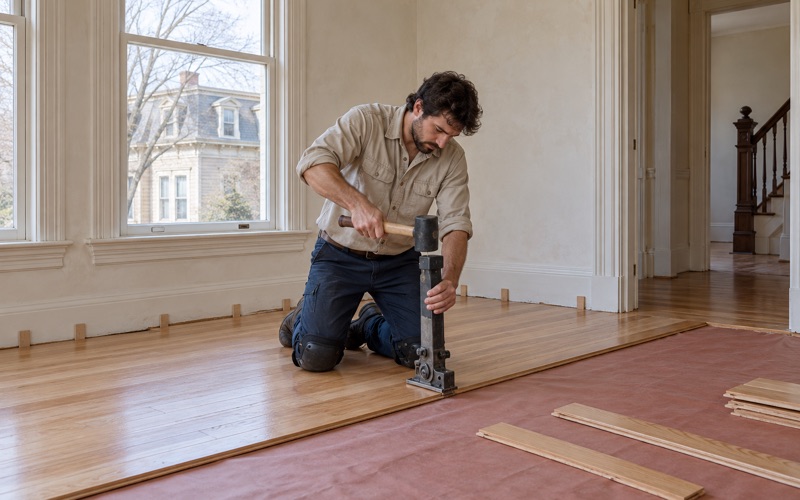
We bring solid hardwood or an engineered wear layer product into the space and let it sit, with the room at its normal living conditions, until meter readings on the boards and the subfloor fall within the range the NWFA Installation Guidelines call for. Rushing that step to save a few days is how a new floor ends up cupped by August.
In a top-floor unit with a hot roof overhead, we pay extra attention to timing. A floor installed during a cool, dry week and then hit with a long run of humid heat needs room to expand at the walls, and we leave that space under the baseboard and shoe molding.
Choosing Flooring That Handles the Swing
Narrower boards move less across their width than wide plank, so a narrow red oak or white oak strip is a forgiving choice for a heat-prone room. Engineered flooring, with its cross-layered core, tends to stay flatter than solid wood through big swings, which makes it worth considering in a unit with little control over the heat.
Prefinished boards come out of the box sealed on top, while site-finished floors are sanded and coated in place. Both work here; the difference is mostly in look, repairability and how long the room is out of use.
Keeping Indoor Conditions Steady
The best thing a household can do for a wood floor is keep the air in the rooms steady. A dehumidifier or air conditioner set to run consistently in summer, rather than only on the worst days, keeps the boards from swinging. A humidifier in winter narrows the gaps that open when the heat comes on.
In a multi-unit building that steadiness is harder, because one unit’s habits affect the next. We talk through those conditions with the owner and the tenants before we install, so everyone knows what the floor needs to stay flat.
Fixing Cupping and Seasonal Gaps After a Hot Season
Not every moving floor needs work. Some need only time and drier air. When a floor does need repair, the order of steps matters more than the tools.
Drying First, Sanding Later
A cupped floor gets dried and watched before it gets sanded. We find the moisture source, which may be a leak from the unit above, a humid space below or simply the summer itself, and we let the boards come back toward balance. Many floors flatten partway on their own once the source is gone.
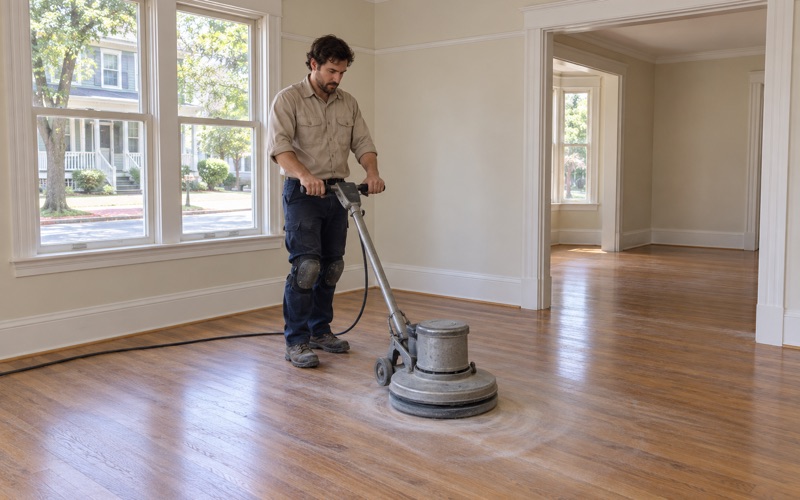
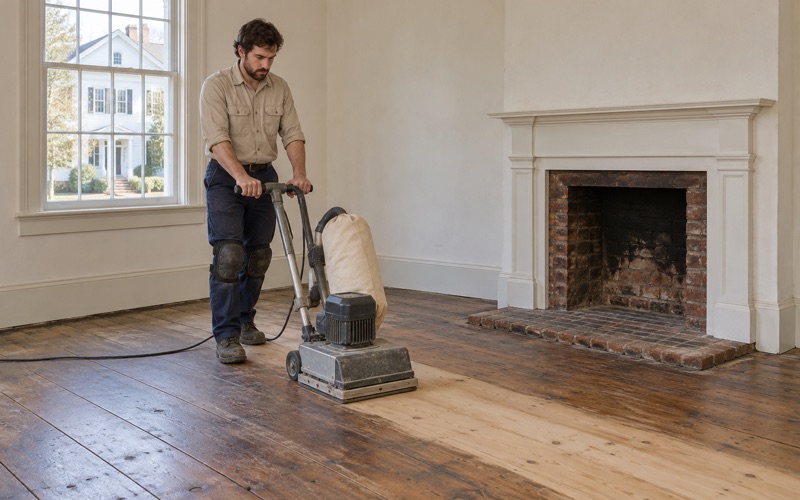
When the readings are stable, we sand with a drum sander and an orbital sander through a planned grit sequence, taking only what is needed to flatten the surface. Old pine and narrow strip floors get checked for wood left above the tongue before any of that starts, because an old floor may not have many sandings left.
Repairing Damage and Water Stains
Heat-season damage often travels with water: an air conditioner condensate line drips, a window leaks during a summer storm, or a unit above floods. We trace it, dry it, read it with the meter and document it room by room so an adjuster has what they need.
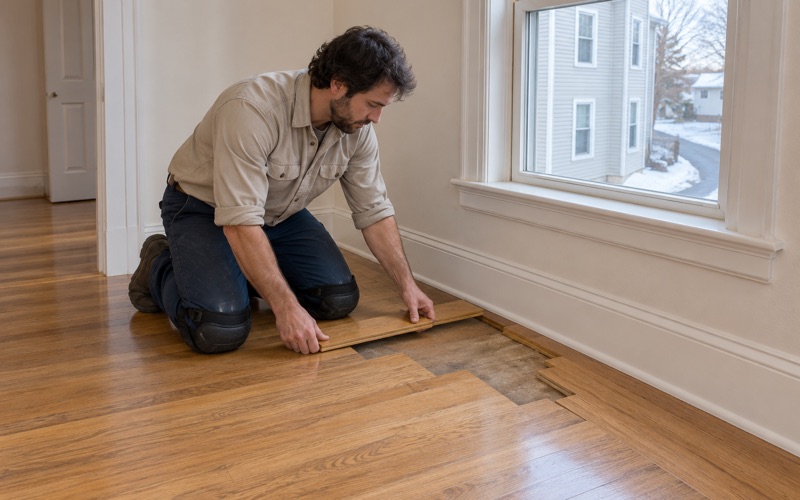
Boards that are stained black, split or permanently buckled get a board replacement or weave-in repair, with new wood woven into the existing floor. The same method covers holes where a radiator pipe or an old wall came out.
Finishing for the People Upstairs and Down
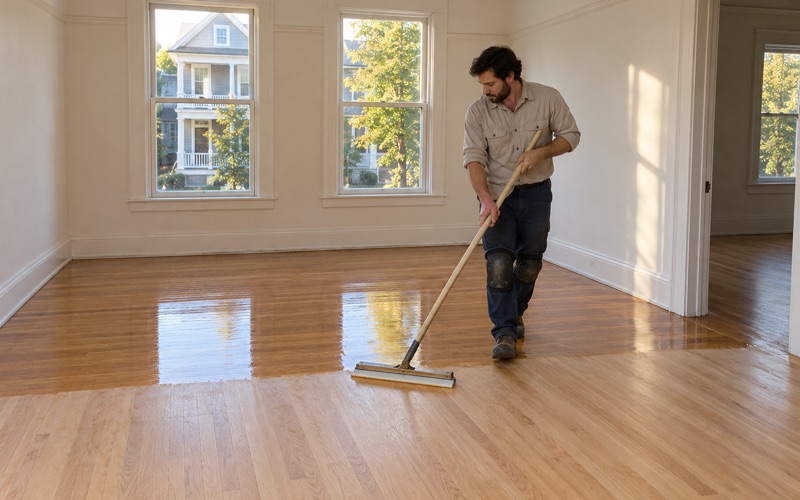
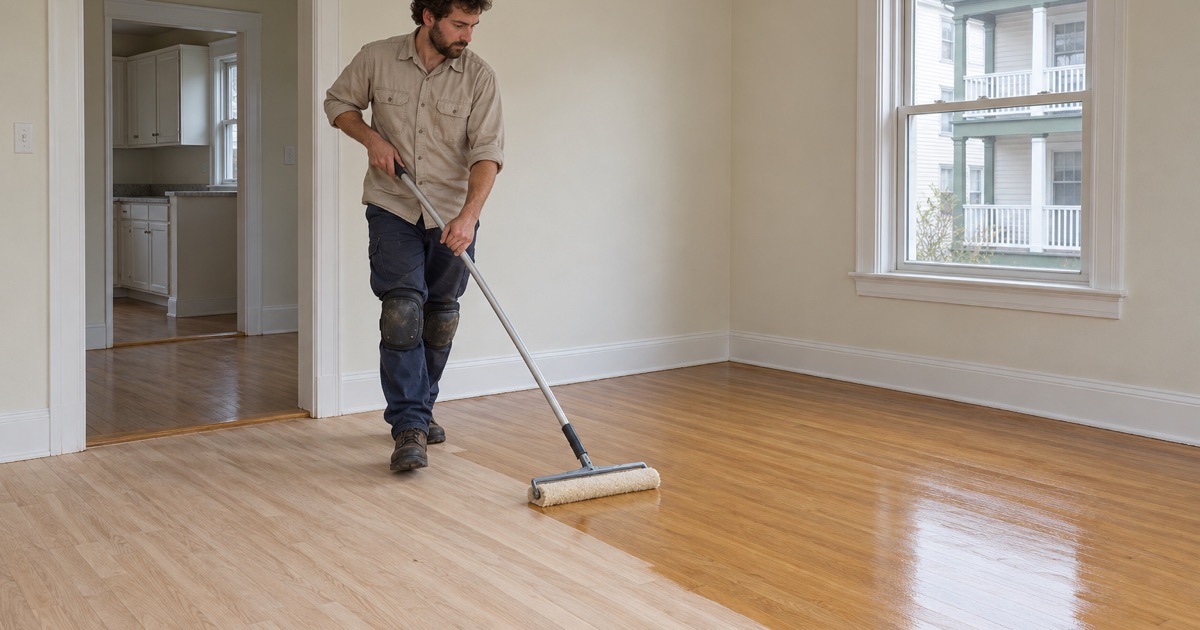
In a two-family house or a three-family house, the finish plan has to account for neighbors. We use waterborne polyurethane and other finishes chosen to fit the Massachusetts VOC limits for wood coatings, and we time coats so fumes and dry times work for the people living above and below.
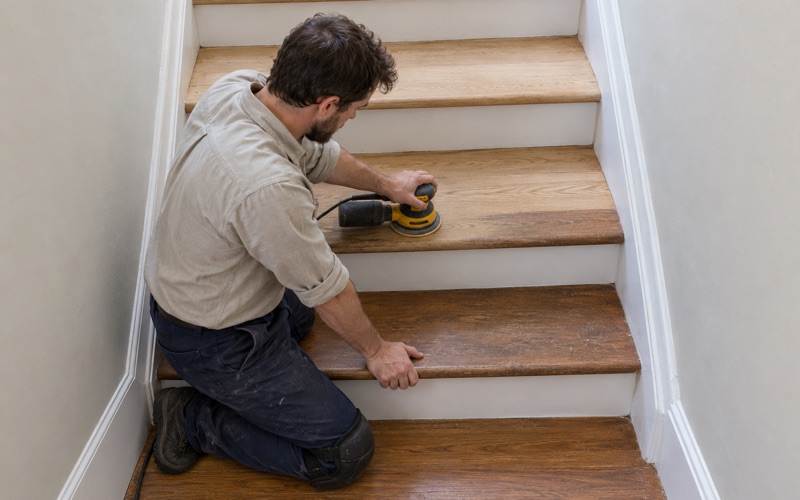
Dust containment comes with every job: doors and returns sealed, a HEPA vacuum running, and the work kept to the unit we are in. Before any sanding we check the build year and painted surfaces, since Massachusetts has its own lead-safe renovation rules for homes built before 1978, and we lay stain and sheen samples on your floor so you choose the color in your own light. You also get a written, itemized estimate, and stair treads are quoted one by one rather than by the square foot.
- 20+ Years With Wood Floors
- Written Itemized Estimates
- Free Estimates