Somerville Wood Flooring brings more than 20 years of wood-flooring work to Lexington, and a good share of the calls we get from town come from condominiums and townhouses rather than detached houses. An attached unit changes the job. There is a shared wall, sometimes a neighbor overhead, and an association whose documents set the rules for notice, work hours and who has to be told what.
We sand, refinish and repair hardwood in those units with the same care over grit sequence, dust and finish that any floor gets. What we add in a condo is planning. We read the association’s own documents before we book a date, and we write the schedule down so the board, the manager and the neighbors all see the same plan.
Every project starts with a visit to the unit and a written, itemized estimate. We note the species, how much wood is left above the tongue, any old repairs, and anything that points to trouble below the surface. You get a price for the floor in front of us, not a square-foot guess made over the phone.
Condo and Townhouse Floors in Lexington
Lexington is mostly a town of detached houses, and the numbers show it. Of 12,754 housing units, 9,394 are one-unit detached, and 80.5 percent of occupied homes are lived in by their owners. Attached homes are the smaller slice of the market, and they are the homes this page is about.
How many Lexington owners live in attached homes
The Census count puts 1,138 one-unit attached homes in Lexington, the townhouse and row-style units that share a wall with a neighbor. Of the households living in them, 748 own their unit, which makes the attached townhouse a real part of the town’s owner market rather than a footnote. Another 351 renter households live in the same kind of home.
For floor work, an owner in an attached unit has two sets of interests to balance. The floor is theirs to refinish, but the building around it is shared, and the association usually has a say in when noisy work happens. We plan for both from the first visit.
What a shared wall changes about sanding
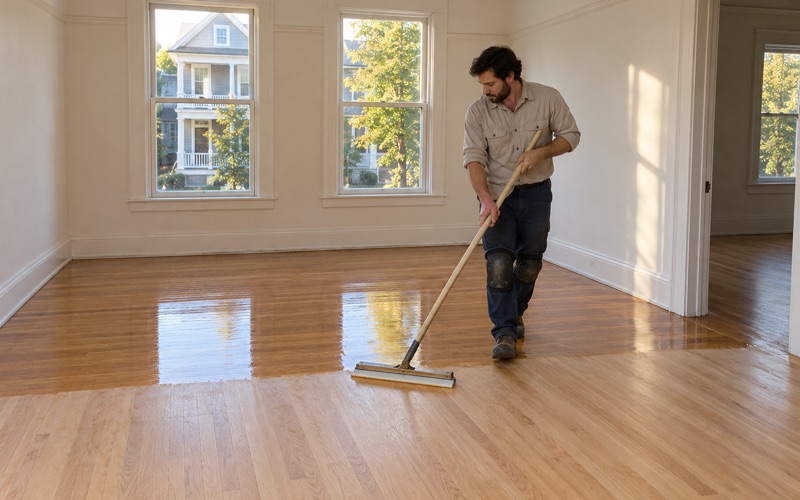
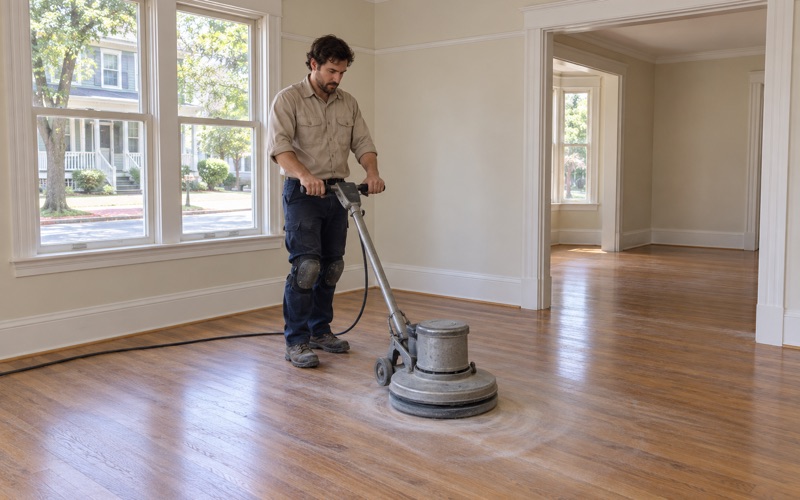
A drum sander is loud, and in a townhouse that noise carries through the party wall. We tell the neighbors which days the heavy sanding falls on, run the loudest steps inside the hours the association allows, and keep the edging and orbital sander work to the same window. The loud stretch is short next to the quieter days of screening, vacuuming and finish coats.
Dust is the other shared concern. We seal doors and returns, run a HEPA vacuum between grits, and keep the dust inside the unit we are working in. Where a hallway or ventilation is shared, that dust containment is what keeps a refinish from becoming a neighbor’s problem.
Rented units in larger buildings
Not every Lexington condo is a townhouse, and not every unit is lived in by its owner. The Census counts 1,201 renter households in buildings of five or more units. For an owner who rents a unit out, we can sand and finish it in the gap between leases, before the next tenant’s move-in date, and leave an itemized estimate to keep with the move-out paperwork Massachusetts asks for.
Looking for wood-flooring closer to Wakefield? See Wakefield Wood-Flooring.
Emerson Gardens and Lexington’s 1987 Conversion Bylaw
Lexington’s condominiums carry a piece of local history that most towns do not have. In 1987, after Emerson Gardens, then the largest rental housing development in town, was announced as facing condominium conversion, residents and other supporters passed a bylaw creating a local condo conversion permit system. Lexington is one of twelve Massachusetts communities with a local condo conversion law of its own.
What the conversion board decides
Under the bylaw, all conversions and evictions must be licensed by the town’s conversion board. The board can attach conditions, and it weighs the public interest of the town, hardships on tenants or the landlord, the aggravation of the rental housing shortage and reasonable accommodations. Those protections go beyond what the state condominium statute, M.G.L. c.183A, provides on its own.
Some tenants get more time. Elderly, handicapped, and low- or moderate-income tenants who can show a hardship, such as finances, health, school, age, family problems or the lack of suitable housing in Lexington, can receive eviction protection for up to five years. In a building going through conversion, that can mean long-term tenants staying on while neighboring units are sold and renovated.
The Lexington Housing Authority share
The town can also require an owner to sell up to 20 percent of the converted units to the Lexington Housing Authority for long-term affordable housing. A converted building can therefore hold privately owned condos and Housing Authority units side by side. For floor work, that matters mainly for scheduling and notice, since the people sharing a hallway or a wall may answer to different owners.
Emerson Gardens today
Emerson Gardens itself is now a condominium community of townhouse-style homes on Emerson Gardens Road, built in 1965, with a seasonal outdoor pool. We have not seen published detail on its interior finishes, so we make no assumption about what sits under the carpet in any home there. We look at each floor in person before quoting anything.
Refinishing a 1960s Lexington Townhouse
Lexington built 1,799 of its homes in the 1960s, about 14.1 percent of the housing stock, and attached units from that decade have their own habits. Floors from that era have often been covered, uncovered and patched at least once. The first job is finding out what is actually there and how much life it has left.
Finding the floor under the carpet
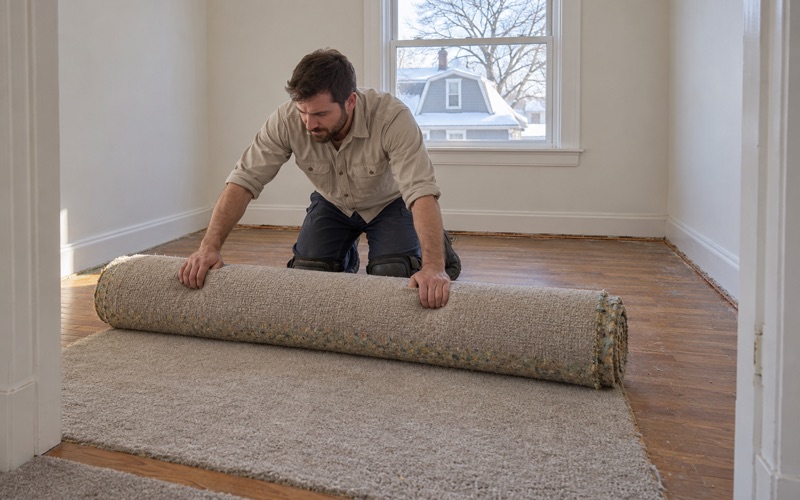
When a 1960s unit has carpet, we lift a corner first. The carpet pad and tack strip leave nail holes and staining along the walls that we plan to sand out or patch. Red oak strip flooring is common in homes of that age, but a unit can just as easily hold parquet, a bare subfloor or a later engineered floor, and we price only what we find.
If we find old resilient floor tile or black mastic in a kitchen or entry, we stop and leave it for the right trade. Tile and adhesives from that period can contain asbestos, and sanding them is not something we do. We work around those areas and come back once they have been dealt with.
Lead checks before sanding
Any home built before 1978 falls under the Massachusetts lead-safe renovation rules, and a 1965 townhouse sits well inside that window. We check the build year and look at painted surfaces such as baseboards, thresholds and stair parts before sanding. Where paint near the floor is a concern, we follow lead-safe practices rather than sanding through it.
How much wood is left above the tongue
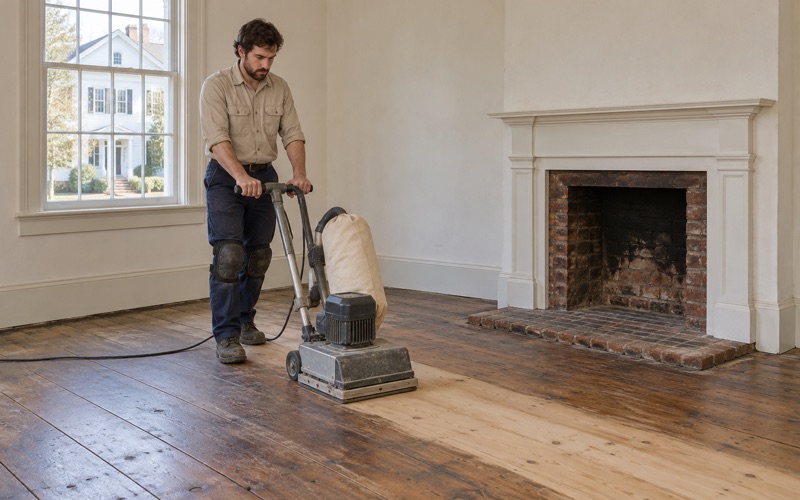
Strip flooring can only be sanded so many times. Before the drum sander comes out, we pull a floor register or check a threshold to see how much wood remains above the tongue. A floor with plenty left gets a full sand, while a thin one may be better served by a screen and recoat, which renews the finish without cutting into the wood.
Traffic lanes, stains and old repairs
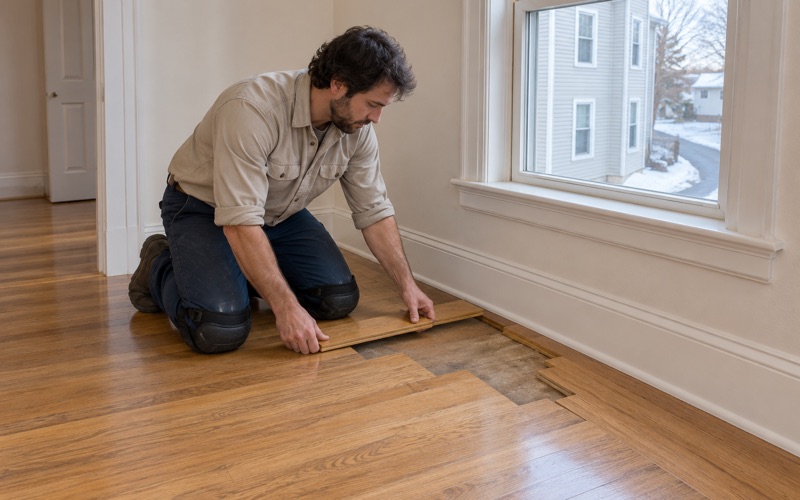
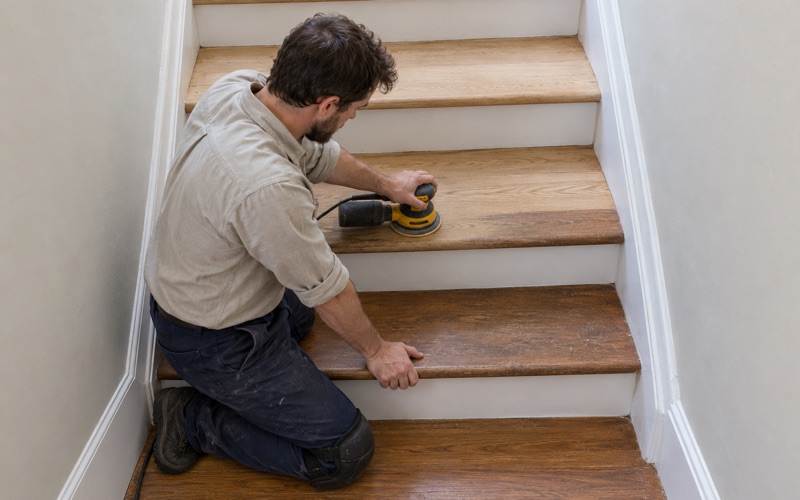
Sixty years of living leaves marks: gray traffic lanes from the door to the kitchen, pet urine stains near a slider, water stains under a plant, and squeaky floorboards by the stairs. Where a radiator, its pipes or a wall came out, we weave new boards into the floor rather than dropping in a square patch. Stairs are quoted tread by tread, because a staircase is not priced by the square foot.
Working With Your Association, Start to Finish
A condo floor belongs to the owner, but the work happens in a building the association governs. We read the master deed, bylaws and any rules the association has adopted before we schedule, instead of assuming every Lexington association works the same way. The answers on notice, work hours and hallway use come from those documents and from the manager.
Notice and work hours
Many associations want notice before noisy work and limit it to set hours. We confirm both in writing, then give the manager and the neighbors a dated schedule that says which days are sanding days and which are finish days. If a shared stair or entry has to close, the closure dates go on that schedule too.
Replacing carpet with hardwood
Some owners want to swap carpet for hardwood, and that is where association documents matter most. Rules on underlayment and floor coverings differ from one association to the next, so we read the actual document and ask the manager before we price a sound-reducing underlayment or an installation. We do not guess at a rule we have not seen.
Finishes and drying time in a shared building
Finish choice affects the neighbors too. We use finishes that fit the Massachusetts VOC limits for wood coatings, and waterborne polyurethane is usually the first choice in an attached unit because of its lower odor and shorter recoat times. Where an owner wants oil-modified polyurethane or a hardwax oil, we plan for the longer cure and let the people next door know.
Before the first sanding day
Gather the association documents, the manager’s contact details and any notice form the board uses. We visit, measure, check the build year and the remaining wood, and lay stain and sheen samples on your own floor so the color is chosen in your own light. You get the written estimate and a draft schedule to send to the association.
During the work and after
Furniture comes out, doors and returns get sealed, and the sanding runs through the grit sequence inside the agreed hours. Finish coats follow, with drying time planned around anyone living in or next to the unit. Once the last coat cures, we walk the floor with you and leave care notes, including when rugs can go back down.
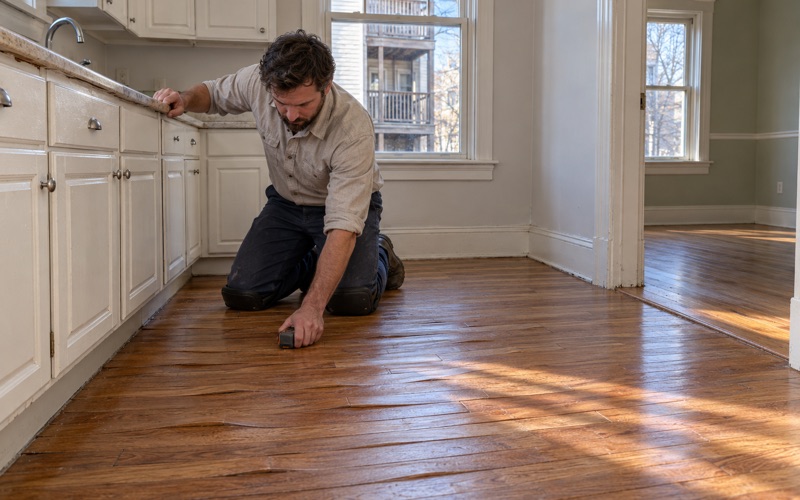
If water came through from the unit above, the plan starts differently. We trace the source, dry the floor and take moisture meter readings room by room, then document them for the adjuster before anyone talks about sanding. Cupping often eases as the boards dry, and the readings tell us when the floor is ready to be judged.
- 20+ Years With Wood Floors
- Written Itemized Estimates
- Free Estimates