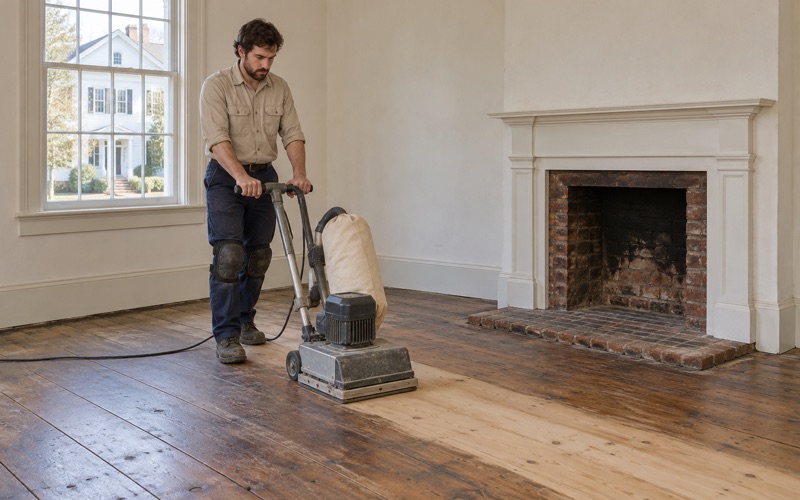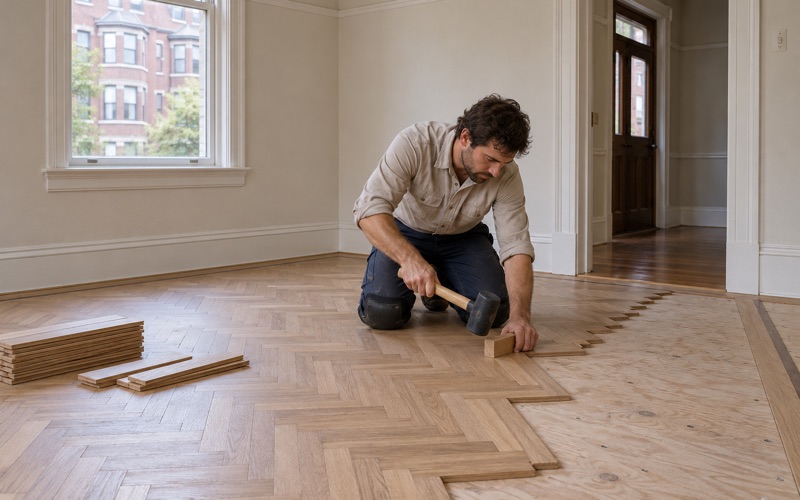
Somerville Wood Flooring has spent more than 20 years on wood flooring in Malden and the older housing around it, and much of that work starts with a floor nobody would call cosmetic. A torn runner on a staircase, a curled edge of old vinyl at a kitchen doorway, a loose tread on the back stairs: these are the spots where a toddler or a grandparent goes down.
We repair, replace and refinish hardwood, but in a house built before 1978 the order of operations matters as much as the finish. Painted baseboards, old resilient tile and dust from decades of wear all change how a floor job should be planned, especially when small children are living in the rooms we are working in.
This page covers what we look at before we quote a floor in an older Malden home, how floor work fits beside a lead-safe repair that someone else may be funding, and how we keep dust where it belongs. We keep the claims plain: we describe what the city program says, and we do our part of the job.
Malden’s Lead and Healthy Homes Program and the Floor
The City of Malden runs a Lead and Healthy Homes Program aimed at the housing stock that most needs it. Lead hazard control money can reach up to $9,100 per unit, and healthy-homes supplements can add up to $5,000 per unit on top of that. The funds come as three-year forgivable loans with no payments and no interest.
Who the program is written for
Eligible properties were built before 1978, the year lead-based paint was banned for residential use, and they may be owner-occupied or rental. Household income has to be below 80 percent of Area Median Income, and homes with children under six get priority. For a rental, the city’s page says rents must stay below Fair Market Rent for low-to-moderate-income households.
That combination describes a lot of Malden. A two-family house with an owner downstairs and a young family renting upstairs is exactly the kind of building the program was drawn around, and it is also the kind of building we spend most of our working weeks inside.
Where the floor appears in the program
The lead hazard control dollars usually go to replacing lead-painted windows, exterior doors and exterior repainting. The floor shows up in the supplements: the city lists repair of trip-and-fall hazards, including replacement of defective floor coverings, among the eligible healthy-homes items.
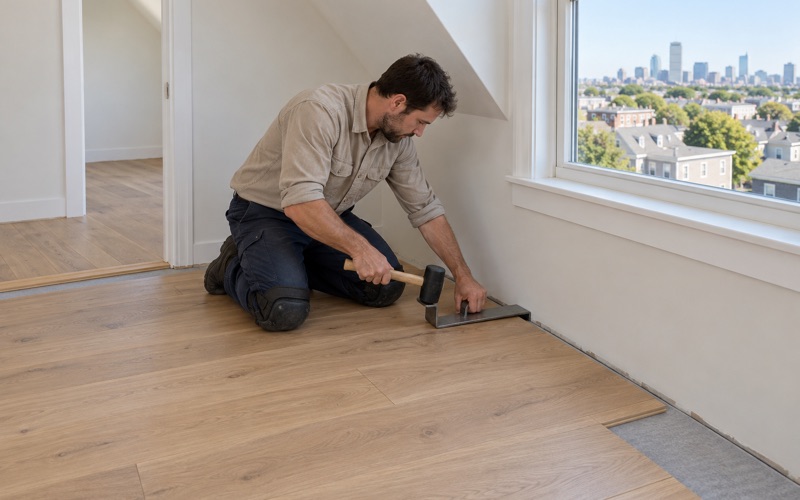
That is a narrow line, and we read it narrowly. It names a defective covering as a safety repair. It does not say the program funds refinishing a sound floor or a new hardwood installation, and we will not tell a homeowner otherwise. What gets approved is between the household and the city.
Who runs it
The Office of Strategic Planning and Community Development administers the program, and that office decides eligibility and scope. We are not a program contractor and do not speak for the city. When a household is working through an application, our role is a clear written description of the floor problem and a separate quote they can show whoever is reviewing it.
The effort has a longer history than the current page. In 2011, HUD awarded the Malden Redevelopment Authority $3,000,000 in Lead Hazard Reduction Demonstration funds to evaluate homes for lead paint hazards and eliminate hazards in 210 homes. The city has been treating old paint as a household health issue for well over a decade.
Looking for wood-flooring closer to Chelsea? See Chelsea Wood-Flooring.
Worn Floor Coverings as a Trip-and-Fall Hazard
A defective floor covering is rarely dramatic. It is a seam in sheet vinyl that has lifted a quarter inch, carpet that has pulled off its tack strip at the top of a stair, or a threshold where two old layers meet at different heights. People step over these for years until someone small or unsteady does not.
Coverings laid over old wood
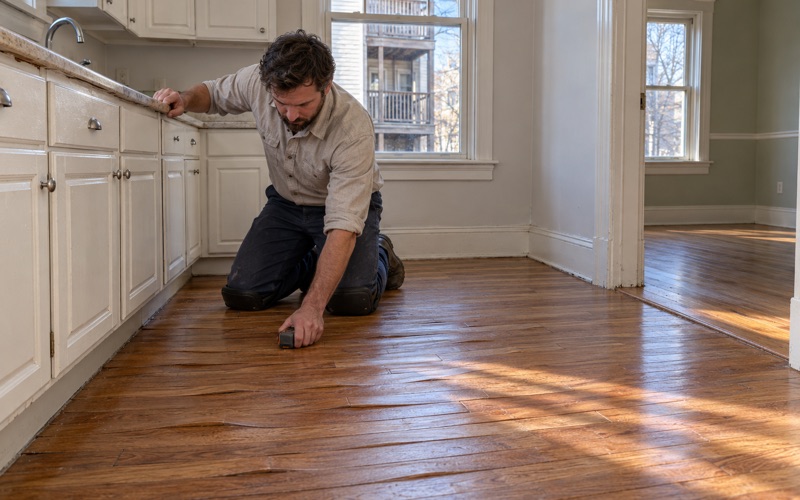
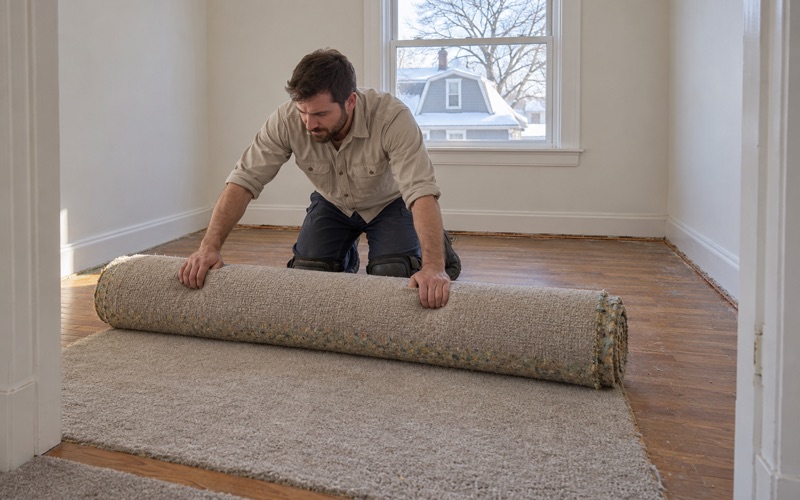
In many older Malden homes the hazard is sitting on top of a decent floor. Carpet pad, tack strip and staples come up to reveal red oak strip flooring or eastern white pine that was covered decades ago. Sometimes the wood is worth saving; sometimes it has water stains, pet urine stains or board gapping that needs board replacement first.
We lift a corner and look before we promise anything. If old resilient floor tile or black mastic is under the carpet, we stop there. Those materials are identified before any sanding and left for the right trade, because grinding through them is not a floor repair.
Stair treads and nosing
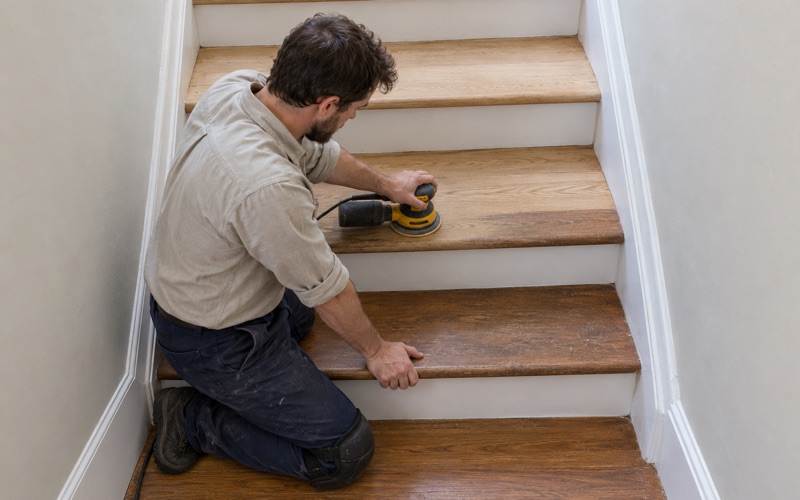
Stairs are where trips turn into injuries. A cupped tread, a split stair nosing, nail pops that leave a raised head on the walking surface, or a runner that slides underfoot all qualify as real hazards. We quote stairs tread by tread, since every step carries its own repair, and a staircase is not priced by the square foot.
Where treads are too worn to sand, we replace them and match the stair risers if needed. Where a covering is the problem rather than the wood, we take it up cleanly and fasten anything loose before the stair goes back into daily use.
Squeaks, gaps and soft spots
Squeaky floorboards and winter gaps are mostly nuisance. A soft spot over a joist, a buckled section near a radiator or a board that rocks under weight is different, and we check the subfloor before deciding whether it is a fastening job or a replacement.
In old houses we also look for frass and small exit holes near basement stairs and sills, the signs of powderpost beetle or old house borer. Damage like that changes a repair from a loose board to a section of new tongue and groove woven into the floor, and it is better found before a quote than after.
Fitting Floor Work Into a Lead-Safe Repair in a Pre-1978 Home
Malden’s housing is old. Of the city’s 27,876 housing units, 70.9 percent were built before 1980, and 45.1 percent date to 1939 or earlier. In a building that age we assume paint on baseboards, door casings, stair stringers and shoe molding may contain lead until the build year and the painted surfaces say otherwise.
Checking before we sand
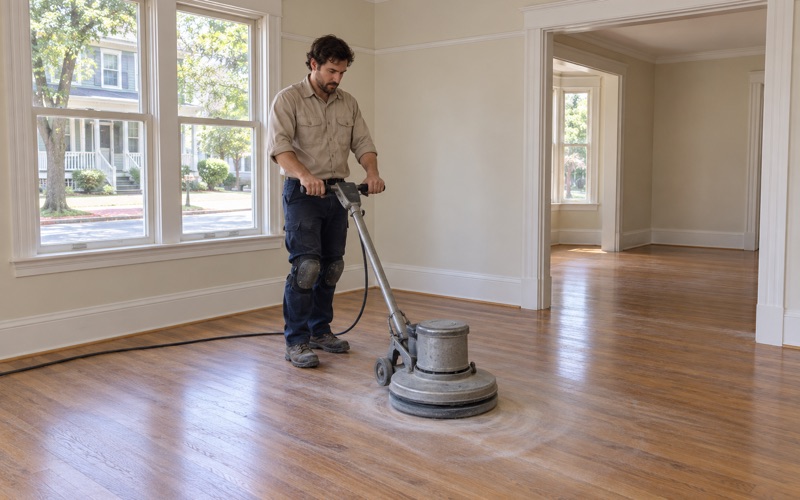
Massachusetts runs its own lead-safe renovation rules for homes built before 1978, alongside the federal EPA RRP Rule. Before any drum sander or orbital sander touches a floor, we confirm the build year and look at every painted surface the work will disturb. Removing a baseboard to reach a floor edge is paint work, not just floor work.
That check shapes the plan. It decides whether trim stays in place, how edges are handled and how the room is set up before the first pass of the grit sequence. We would rather spend an hour on it than discover the problem in the dust bag.
Floor work after the windows
When a household is also getting lead hazard control on windows, doors or exterior paint, the floor should usually come later. Window work can leave debris on the sills and the floor below, and a freshly finished floor is the wrong surface to collect it. We ask what other work is scheduled and when, then place the floor at the end of the sequence.
If the job is the trip-and-fall repair alone, the order is simpler. We remove the defective covering, deal with what is underneath, and leave a safe walking surface on a date written into the estimate.
Two-family and three-family houses
A large share of Malden’s units sit in two-, three- and four-unit buildings, so the household upstairs or downstairs is often still living there. We work one unit or one floor at a time. Common hallway stairs and landings get scheduled around every unit that uses them, and the closure dates are written down before we start.
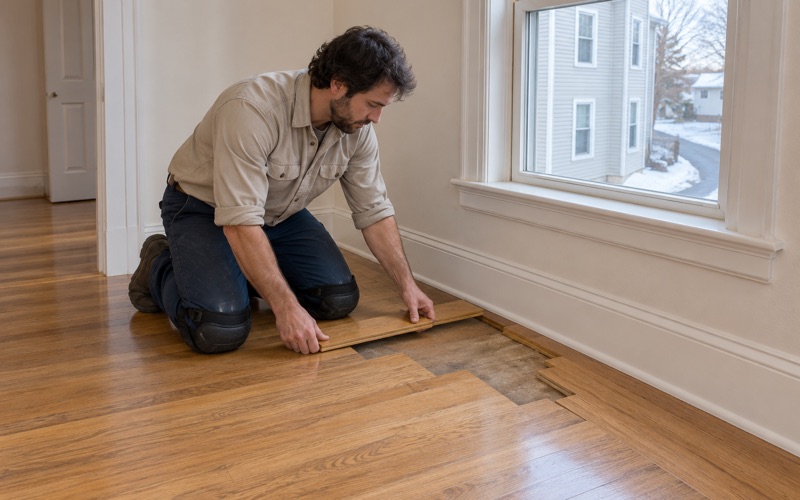
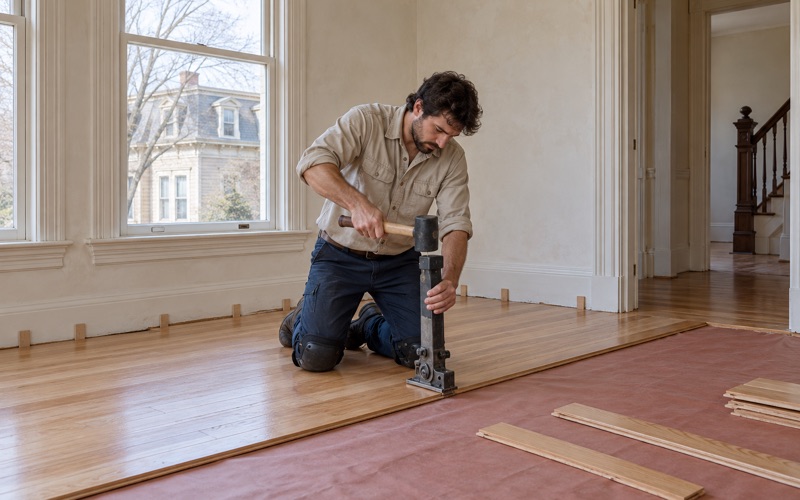
Where a radiator, its pipes or an old wall came out during other repairs, the floor is left with holes and mismatched edges. We patch those with boards woven into the existing floor rather than a square plug, so the repaired area reads as part of the room and leaves no raised edge to catch a foot.
Keeping Dust Down Where Small Children Live
The program’s priority on homes with children under six is a reminder of who is crawling on these floors. A floor job in an occupied pre-1978 home has to end with less dust in the house than it started with, not more.
Containing the work area
We contain dust to the unit and the room being worked on. Doors are sealed, heating and air returns are covered, and the work area is closed off so dust does not travel to the next room or the next apartment. Sanding equipment runs with dust collection, and cleanup is done with a HEPA vacuum rather than a broom.
We do not quote a dust-clearance figure, and we do not perform lead clearance testing. If the household’s program or the property owner needs clearance, that is a separate step with its own provider, and we leave the room ready for it.
Finishes and drying time
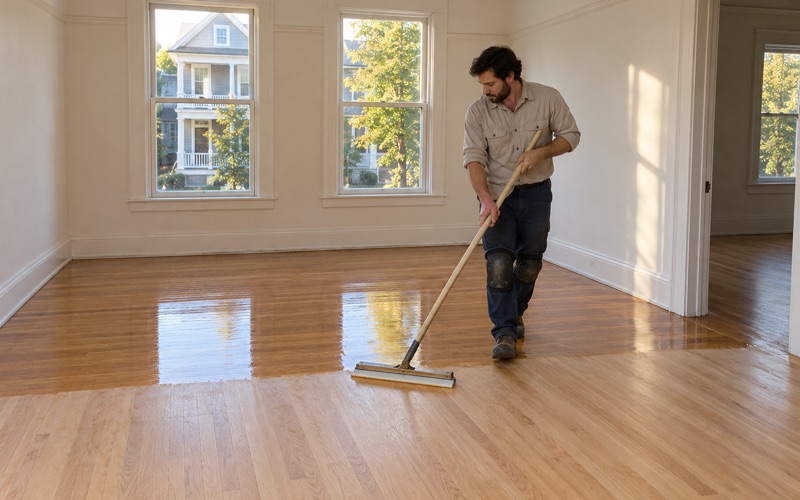
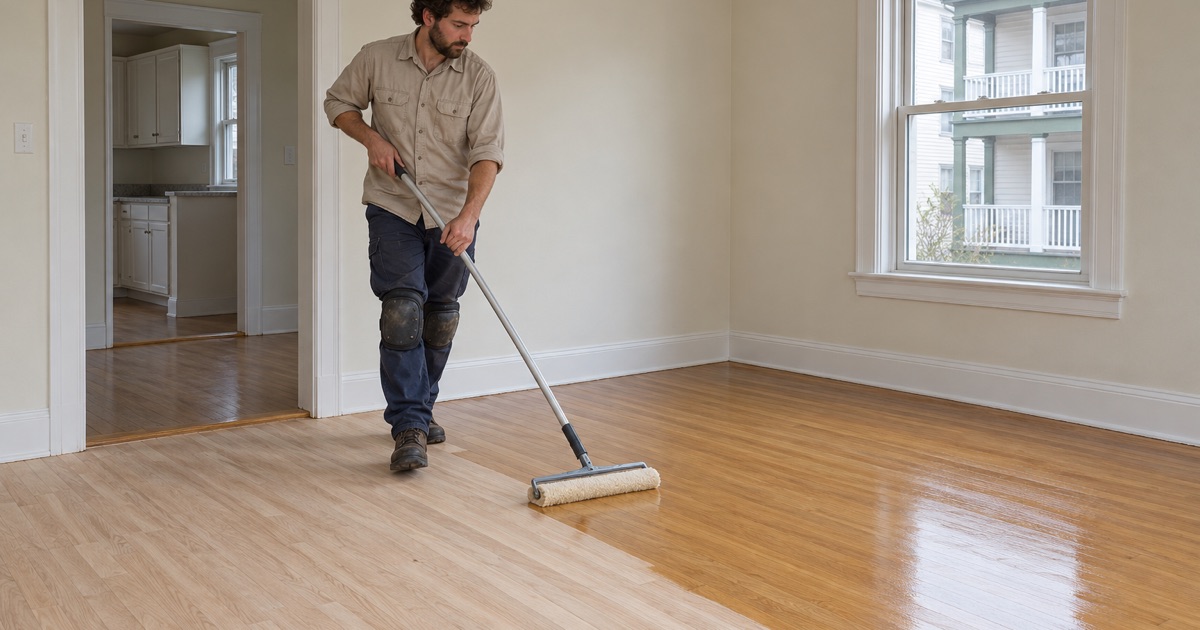
Finish choice matters when a family is in the house. We select coatings that fit the Massachusetts VOC limits for wood coatings, and a waterborne polyurethane is often the practical choice where people cannot leave for long. We plan fume and drying times around nap schedules and bedtimes, and tell the household when each room can be walked on again.
Where the color matters, we lay stain and sheen samples on the actual floor first. Old red oak can turn pink or orange under some stains, and seeing it in place beats guessing from a chip.
Vacant units between leases
For landlords, the cleanest time to do this work is often when a unit is empty. We sand and finish vacant units in the gap between leases, before the next tenant moves in, and provide a written, itemized estimate that can sit in the file with the move-out paperwork Massachusetts asks for.
That gap also removes the hardest part of a lead-careful floor job: working around a family. A turnover lets us contain, sand, clean and finish without a child in the next room, and hand back a floor that is safe to walk on from the first day of the new lease.
- 20+ Years With Wood Floors
- Written Itemized Estimates
- Free Estimates