Somerville Wood Flooring has spent more than 20 years on wood-flooring in Melrose and around it, and a good part of that work happens in houses whose owners intend to stay exactly where they are. The jobs we see most are the quiet ones: a board that has lifted in the hall, a kitchen path worn down to gray wood, a living room that has not been sanded in decades.
We plan those jobs around the person who will be home while we work. That means a written schedule before the first sander arrives, rooms finished in an order that keeps a bedroom, a bathroom and the kitchen reachable, and dust kept inside the room being worked on. Nobody has to pack a bag or stay with relatives for a week.
Every estimate is written and itemized room by room, so you can see what each part of the job costs and decide which rooms come first. If the house needs repairs this year and a full refinish later, we price the two separately and say so plainly, rather than folding everything into one number.
Staying Put in a Long-Held Melrose House
Melrose has made a public decision about its older owners, and that decision shapes the kind of floor work its houses need. When someone means to stay for another decade or two, the floor has to be safe to walk on now and sound enough to last, not dressed up for a sale.
What the City Puts Toward Older Owners
The city’s means-tested senior exemption was renewed by the Legislature for fiscal years 2026, 2027 and 2028. Seniors qualify if they receive the Massachusetts Senior Circuit Breaker Tax Credit on their income tax return, and applications go through the Melrose Assessors’ Office. In fiscal 2025 that exemption gave 107 households $284,574 in relief.
The property tax work-off program added more, giving 49 seniors $44,035 that same year. The city states its aim directly: to help Melrose seniors “age in place and not be taxed out of our community.” That relief is the city’s program and has nothing to do with our pricing, but it tells us who we are likely to meet at the door.
Who Lives in These Houses
Census estimates put 2,553 Melrose owner households, 30.7 percent of all owners, under someone 65 or older. Across the city, 67.2 percent of occupied homes are owner-occupied, and 6,534 owner households live in detached houses. Many of those owners have walked the same rooms for a long time.
For floor work, that changes the conversation. The owner usually knows which board has always creaked, which doorway the floor dips toward and which room got wall-to-wall carpet years ago. We listen to that history before we lift anything, because it often points straight at the problem.
Floors That Have Outlasted Several Finishes
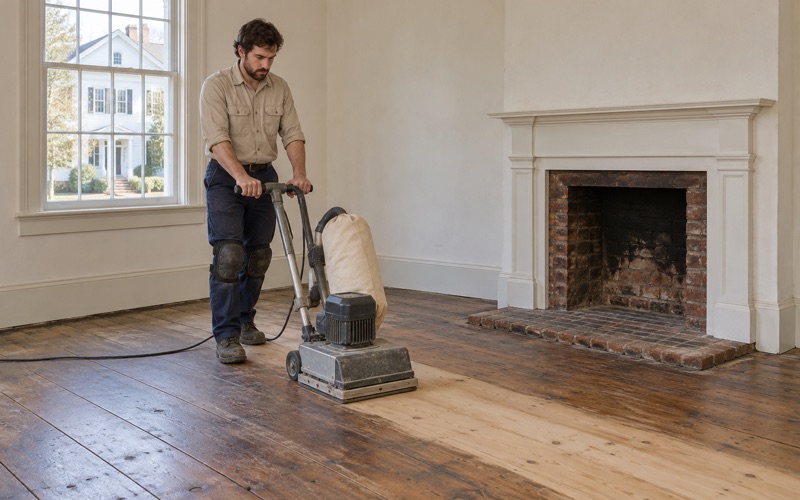
In Melrose, 52.2 percent of housing units were built in 1939 or earlier. In houses of that age we commonly find red oak strip flooring in the main rooms, eastern white pine in back rooms and upstairs, and older finishes such as shellac or wax under later coats of polyurethane. Some of these floors have already been sanded more than once.
That history matters because a solid hardwood floor only has so much wood above the tongue and groove. Before we quote a full sanding, we check the remaining thickness at a floor register or an edge. If a floor has little left, we recommend a screen and recoat or targeted board replacement instead of taking off more wood.
Looking for wood-flooring closer to Boston? See Boston Wood-Flooring.
Loose Boards, Worn Spots and Thresholds That Catch a Foot
When an owner plans to stay, the first priority is rarely color. It is the board that moves underfoot, the raised edge at a doorway or the spot near the sink where the finish is long gone. We treat these as repairs in their own right, and most can be done without refinishing the whole house.
Lifted and Loose Boards
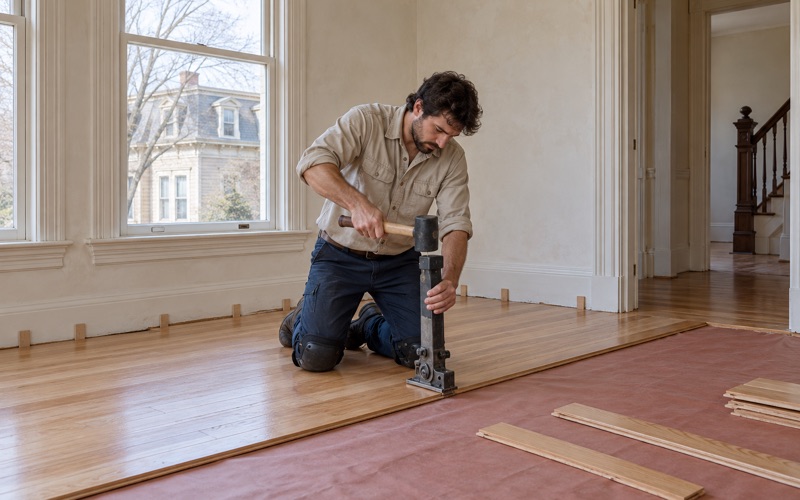
A board that rocks or rises at one end usually has failed fasteners, a loose connection to the subfloor or a seasonal swelling problem. Older Melrose floors were often put down with cut nails and face nails, and over decades those work loose. We refasten where needed, set the heads and fill them so nothing sits proud of the surface.
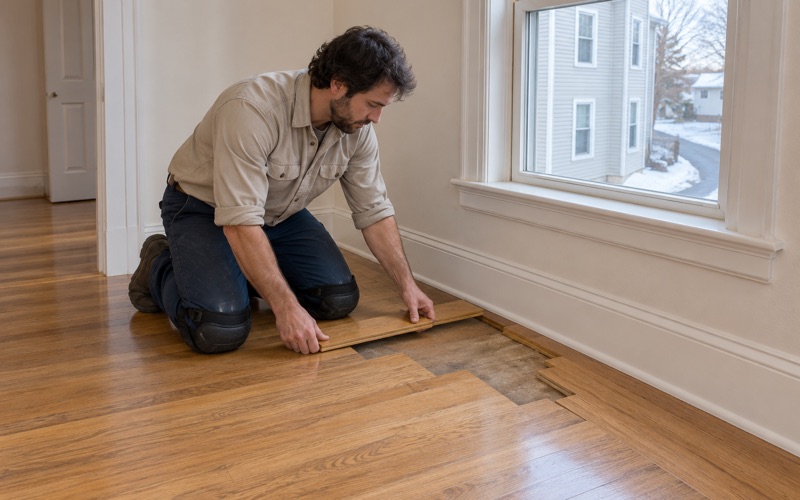
Where a board has split or crowning has lifted its center, we cut it out and weave in a replacement of matching species and width. A weave-in repair staggers the new boards into the old ones, so the patch does not read as a square. The same method closes holes left where a radiator or its pipes once came through the floor.
Worn Traffic Lanes and Bare Wood
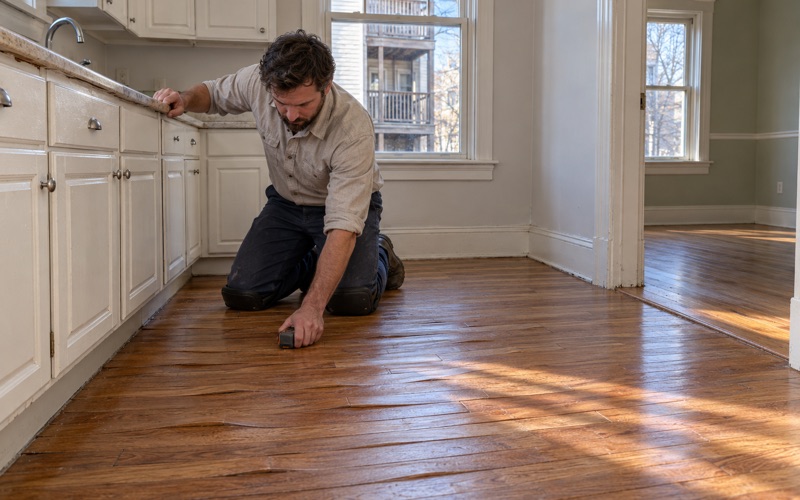
Traffic lanes form along the routes a household walks every day: kitchen to table, bedroom to bath, front door to the stairs. Once the finish wears through, bare wood picks up water stains and dirt, and the gray patches spread. Left long enough, the edges of a worn area can start to splinter.
If the wood itself is sound, a screen and recoat can restore the protection with far less disruption than full sanding. If the finish is peeling or the wood has darkened, we sand that room fully and blend the work at a natural break such as a doorway, so the repair does not stop in the middle of open floor.
Thresholds and Height Changes
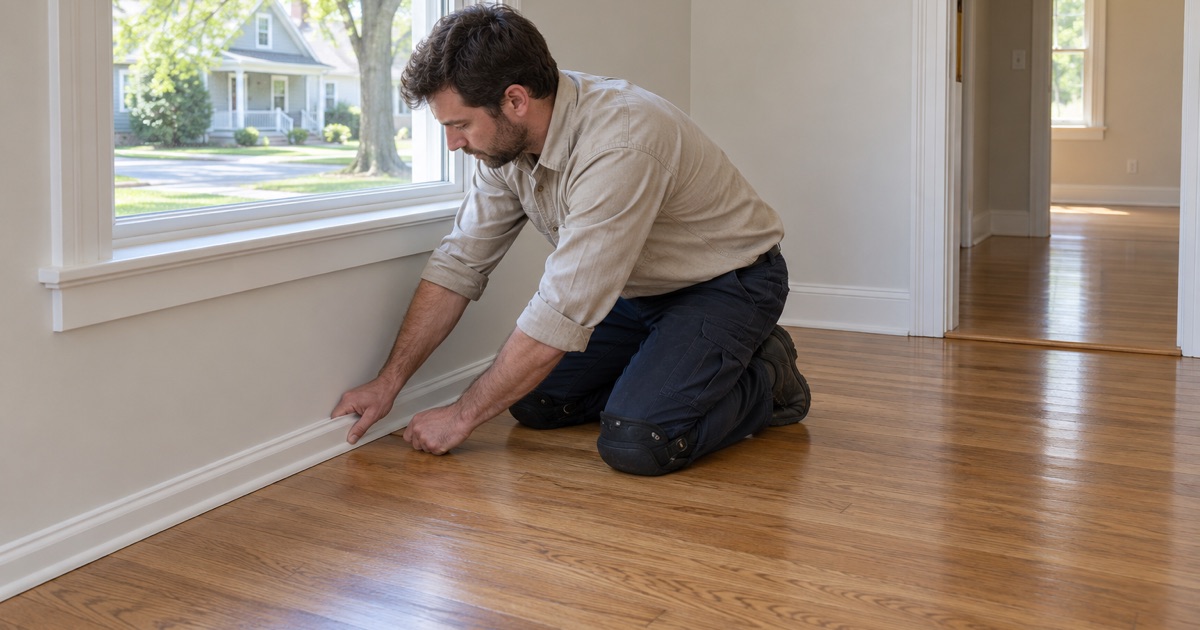
Many long-held houses have a patchwork of floors: hardwood in the front rooms, resilient floor tile in the kitchen, carpet over pad and tack strip in a bedroom. Where those meet, a raised threshold or a worn saddle can catch a toe. We treat these as trip hazards and fix the transition rather than leaving it for later.
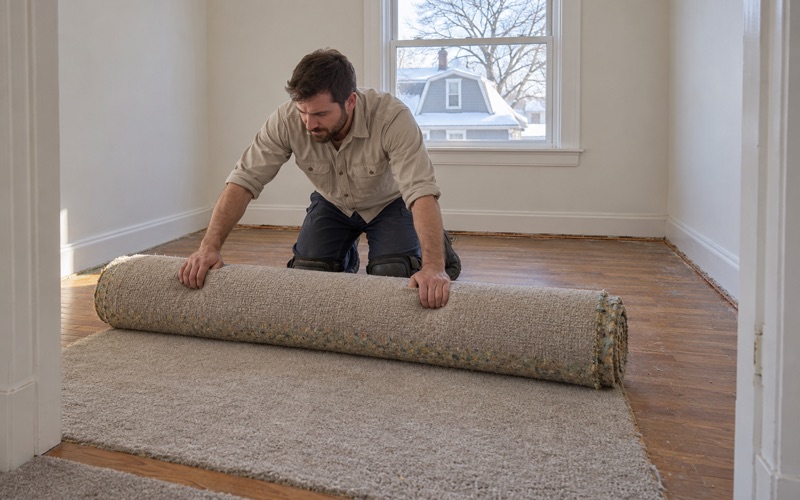
When carpet comes up, we pull the tack strip and staples and check the hardwood underneath, which is often in better shape than the owner expected. Where heights differ, we choose a reducer or a new saddle that tapers the step instead of leaving a lip at the doorway.
Squeaks, Nail Pops and Winter Gaps
Squeaky floorboards and nail pops are more annoying than urgent, but in a quiet house they are heard all day. We locate them from above, and from the basement where a joist is reachable, and fasten the boards back down. Winter gaps between boards are normal in heated houses and usually close again in summer.
We tell owners which gaps are seasonal and which point to moisture or a failing subfloor. Board gapping that stays wide all year, or cupping near an exterior wall, is worth a moisture meter reading before anything is filled, because filler packed into a seasonal gap only cracks out again.
Refinishing One Room at a Time While You Live There
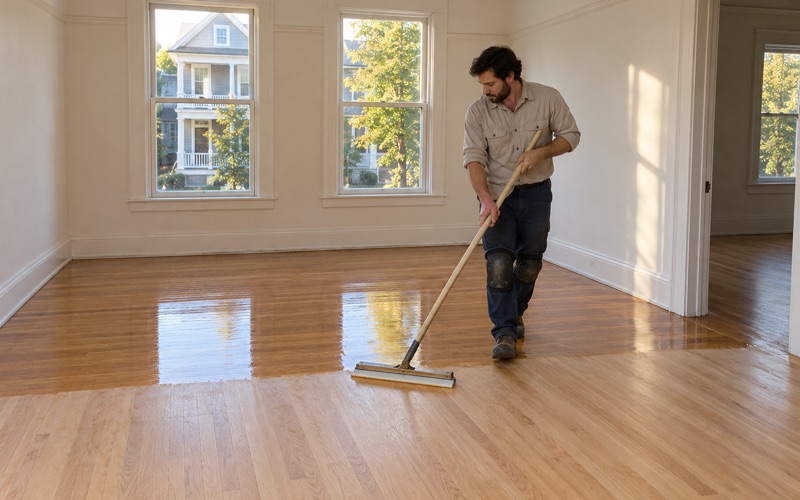
A full refinish does not require emptying a Melrose house. We split the work into rooms or groups of rooms, finish one before starting the next, and agree on the order with you beforehand. Furniture moves within the house, not out of it, and the rooms you rely on stay open as long as possible.
Starting With the Rooms You Can Spare
Most owners prefer to begin with a dining room, a front parlor or a spare bedroom, the rooms they can close off for a few days without disrupting meals or sleep. We sand, stain if wanted and finish that room, then let it cure before the furniture comes back in.
The main bedroom and the main path through the house usually come last, often on a separate visit. That way there is always a place to sleep and a clear route to the bathroom. We write the sequence into the estimate, so it is agreed in writing before any work starts.
Keeping Dust in the Room Being Worked On
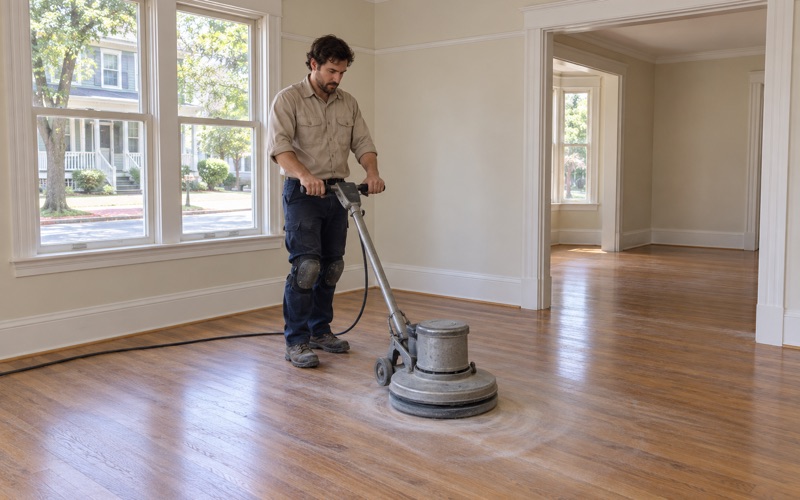
Our sanders run with dust containment, and we seal doors, floor registers and returns in the room we are working on. A HEPA vacuum runs between each step of the grit sequence, and again before any finish goes down. The rest of the house stays as it was.
For someone at home all day, that matters as much as the finish itself. Dust that drifts into the kitchen or a bedroom is not just a cleaning job; it settles into bedding and onto counters. Containing it at the doorway is what lets an occupied house stay livable while one room is being sanded.
Finishes, Odor and Drying Time
We choose finishes that fit the Massachusetts VOC limits for wood coatings, and for occupied houses we often suggest waterborne polyurethane, which has a milder odor and shorter recoat times. Oil-modified polyurethane and hardwax oil remain options where an owner prefers them, with drying times planned around the household.
We also talk through sheen level. A satin or matte finish hides wear and scuffs better than high gloss and throws back less glare in a bright room. We lay out drying and cure times in writing, so you know when socks are fine on the new floor and when rugs can go back down.
Lead and Old Tile Checked First
Massachusetts runs its own lead-safe renovation rules for homes built before 1978, so we check the build year and any painted surfaces near the floor, such as baseboards and thresholds, before sanding. In a city where most houses predate 1940, that check is routine rather than an exception.
We also look for old resilient tile and black mastic under carpet or in kitchens and back halls. If we find them, we stop and leave that material to the right trade rather than sanding through it. The floor work picks up again once that material has been handled properly.
Planning Floor Work Around a Household That’s Home All Day
A household with someone home all day needs a different schedule from an empty house. We set the plan with the owner, and with family members if they help with decisions, so everyone knows what each day of the job looks like before it begins.
A Written Schedule Before Anything Moves
We write down which rooms close on which days, when finish goes on and when each room reopens. If a son, daughter or neighbor wants a copy, we provide one. Plans sometimes shift with drying conditions, but a written schedule means nobody in the house has to guess.
We also agree on working hours that suit the household. Some owners want an early start and a quiet afternoon; others prefer the reverse. Machine sanding is the loud part of the job, and we can concentrate it into fewer hours when that makes the day easier.
Stairs Done in Stages
If the bedrooms are upstairs, the staircase cannot simply close for three days. We quote stairs tread by tread and finish them in alternating steps or in halves, so they can still be used with care while the finish cures.
A stair tread that shifts, a loose stair nosing or one worn round at the edge gets the same attention as a loose board on the floor. That repair comes before any finish goes on, because on a staircase someone climbs every day, a firm step is the point of the job.
Choosing a Color on Your Own Floor
Stain on a showroom sample rarely looks the same on old red oak or pine. We lay stain and sheen samples directly on your floor, in your own light, so you can look at them over a day or two before deciding.
Many owners in long-held houses choose to keep the color they have lived with, simply renewed. Others want something lighter or warmer. Either way, the samples sit where you can see them from your usual chair, and the decision stays entirely yours.
- 20+ Years With Wood Floors
- Written Itemized Estimates
- Free Estimates