
Somerville Wood Flooring offers screen and recoat hardwood floor service in Somerville, MA, serving surrounding cities including Cambridge, Charlestown, Medford, Everett, Back Bay. After 20+ years of refinishing floors in the area, we recommend a recoat whenever a floor allows one, because it renews the finish without taking any wood off the top, and on old red oak strip and pine floors that have already been sanded several times, wood is the thing worth saving.
A screen and recoat lightly abrades the existing finish with a fine screen or pad on a buffer, cleans the floor thoroughly, and lays one or two fresh coats of finish on top. It is faster, quieter, cheaper and far less dusty than full sanding. The catch is that it only works on a finish that is worn but still intact and still bonded, so we test before we promise anything.
When a Recoat Is the Right Choice
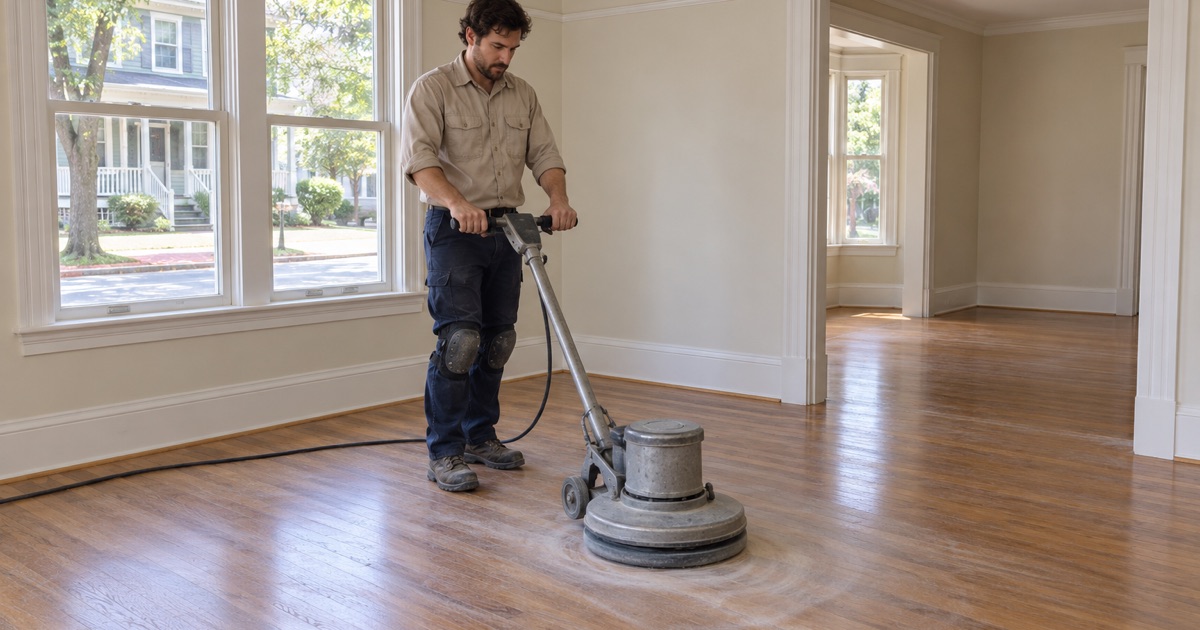
Dull, Scuffed but Intact Finish
The ideal recoat floor has lost its shine, picked up fine scratches and scuffs, and maybe shows light wear in front of the sink or at doorways, but the finish still covers the wood everywhere. Screening knocks back the old surface so the new coat bonds, and the fresh finish fills fine scratches and restores an even sheen.
Timed well, a recoat every few years means the finish never wears through, and the wood underneath never has to be sanded at all. That is the cheapest way to keep a hardwood floor for the long run.
Floors With Little Wood Left
Old strip oak and pine that have been sanded many times may have very little wood left above the tongue and groove. For those floors, a screen and recoat is often the best option available, because it renews the surface without removing any of the remaining wood. We check the thickness when there is any doubt.
Rental Turnovers on a Tight Schedule
Between one lease and the next, there is often only a day or two to work. A screen and recoat fits that gap better than a full refinish, and it brings a tired rental floor back to clean and even. The itemized invoice also records the floor’s condition, which is useful alongside the move-out paperwork.
When a Recoat Will Not Work
Wax and Old Shellac
Floors that were waxed, even years ago, carry wax residue in the finish and the grain. New polyurethane will not bond to it and peels in sheets, often within months. Old shellac finishes can also reject modern coatings. We test for both, and if either is present, full sanding is the honest answer rather than a recoat that fails.
Worn-Through Traffic Lanes and Stains
Once traffic lanes have worn through to gray, exposed wood, a recoat seals the dirt in rather than fixing it, and the lanes show through the new finish. Pet urine stains, water stains and deep scratches into the wood are also beyond what screening can reach. Those floors need sanding, repairs or both.
Floors Cleaned With Oil Soaps or Polishes
Some floor cleaners and polishes leave a film that blocks new finish from bonding. We clean and test before coating, and where a product has built up, we may need a chemical bonding step or full sanding instead. After the recoat, a pH-neutral cleaner made for finished wood floors keeps the new finish clean without leaving a film behind.
How We Do a Screen and Recoat
Adhesion Testing First
Before quoting, we test the finish in an inconspicuous spot to see whether a new coat will bond. That single test is what separates a recoat that lasts from one that peels, and it is the step most often skipped. If the test fails, we tell you before any money is spent, and explain whether a chemical bonding step or full sanding is the better route for that particular floor.
Screening and Dust Control
Screening produces fine powder rather than the heavy sawdust of sanding, and we collect it with HEPA vacuums and tack the floor before coating. Doors and returns are sealed so the little dust there is stays in the room, which matters in a two-family or condo where neighbors share the air.
Finish Coats and Sheen
We use a waterborne polyurethane that fits the Massachusetts VOC limits for wood coatings, dries quickly and carries little odor, so most households stay home through the work. A recoat is also the moment to change sheen level, from a dated gloss to a calmer satin or matte.
Recoating in Shared Buildings
Two-Families, Condos and Common Areas
Because a recoat is quick and quiet, it suits occupied buildings well. We can recoat one unit or one floor of a two-family while the household above or below carries on, and recoat common hallway stairs and landings on agreed days so every unit keeps a way in and out.
Condo Association Rules
Condo associations often set notice periods and work hours for any contractor. We read the documents and schedule the recoat to match, so the work is finished before the building’s quiet hours begin. Because a recoat is a one-day job with little noise and dust, it is often the easiest floor work to get approved in a building with strict rules.
Keeping the New Finish Longer
Felt pads under chairs and tables, mats at entries and a damp rather than wet mop add years to a recoat. Grit tracked in from the street is what wears a finish fastest, so a mat inside and outside each door does more than any product. When the floor starts to dull again in the busiest paths, that is the moment to book the next recoat, before the wood is exposed.
- 20+ Years With Wood Floors
- Written Itemized Estimates
- Free Estimates